Why Ranking Higher Is Not Enough: Measuring True Local SEO Business Impact
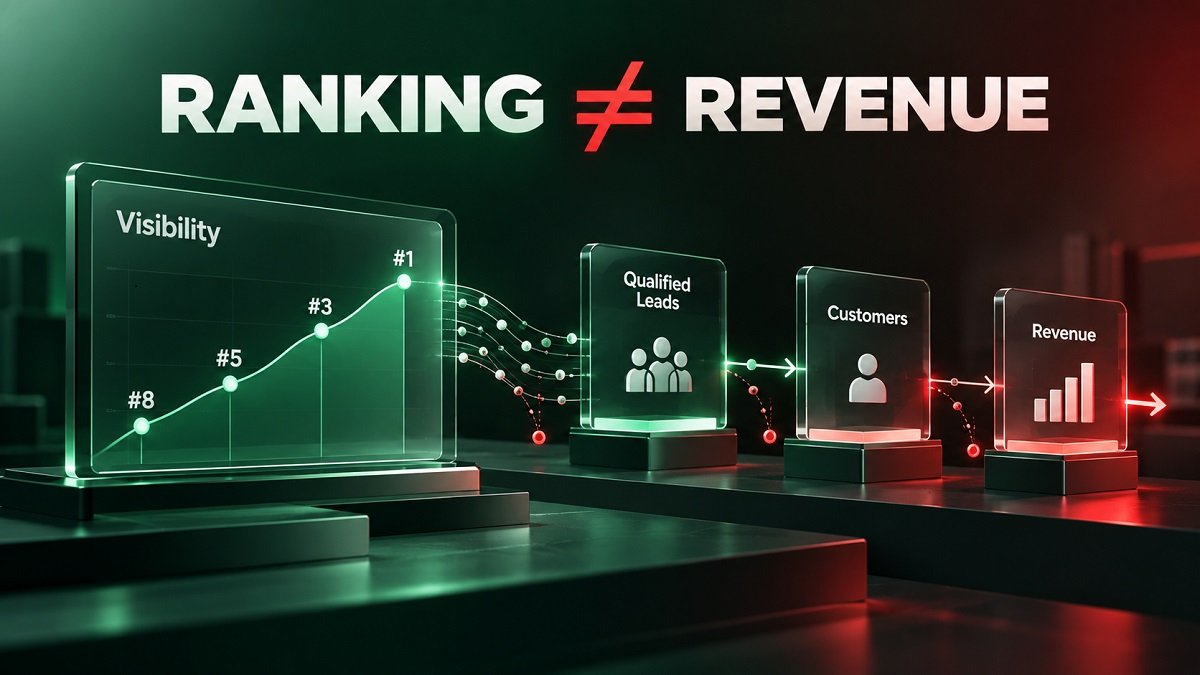
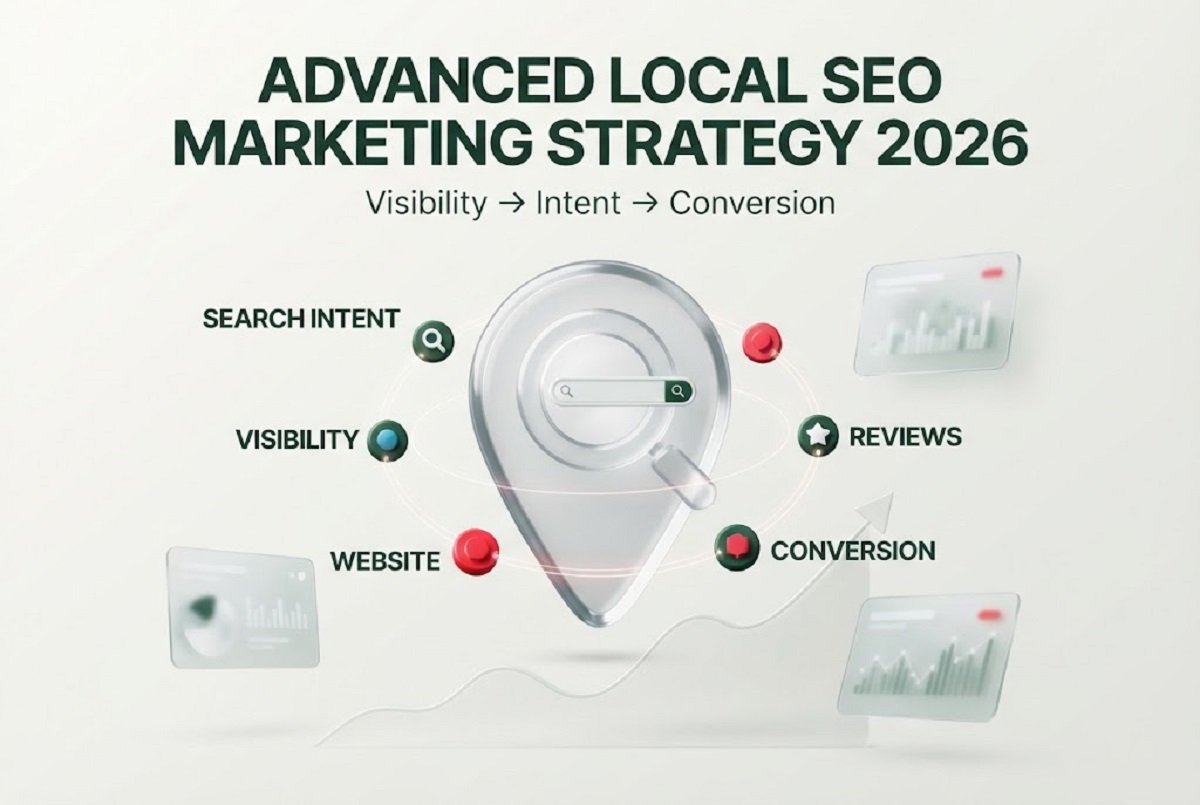
Why Ranking Higher Is Not Enough is an important question for businesses investing in local search. Ranking higher can increase visibility, but it does not automatically mean a business is generating more qualified leads, customers, or revenue. A strong local SEO strategy should therefore measure more than search positions and impressions—it should connect search visibility with meaningful business outcomes.
But rankings alone do not explain whether local SEO is actually creating business value.
A higher position can increase visibility without increasing qualified leads, phone calls, appointments, or revenue. This is why businesses need to look beyond rankings and evaluate how search visibility contributes to real customer actions.
Why Ranking Higher Is Not Enough becomes clear when local SEO is measured as a business growth system rather than a simple ranking exercise.
Rankings Are a Visibility Metric, Not a Business Outcome
Search rankings tell you where a business appears for specific queries. They can help identify changes in visibility and search performance, but they do not directly measure commercial impact.
A business may rank highly for a broad local keyword and still receive limited business value if:
-
The keyword has weak commercial intent
-
The searcher is outside the company's service area
-
The landing page does not match the customer's needs
-
The business profile does not encourage action
-
The leads generated are poorly qualified
-
The sales process fails to convert opportunities
This creates an important distinction between search visibility and business performance.
A strong local SEO strategy should connect the two.
Local Visibility Does Not Always Mean Qualified Demand
More visibility can produce more traffic, but traffic volume is not the same as customer demand.
Consider two businesses competing in the same market. One receives thousands of local impressions but generates relatively few qualified inquiries. Another receives fewer impressions but consistently attracts customers who request estimates, schedule appointments, or make purchases.
Looking only at rankings may make the first business appear more successful.
Looking at business outcomes creates a different picture.
The real question is not simply:
“How high do we rank?”
It is:
“What happens after people discover us?”
This shift helps businesses evaluate local search as part of the entire customer journey.
Measure the Search-to-Lead Connection
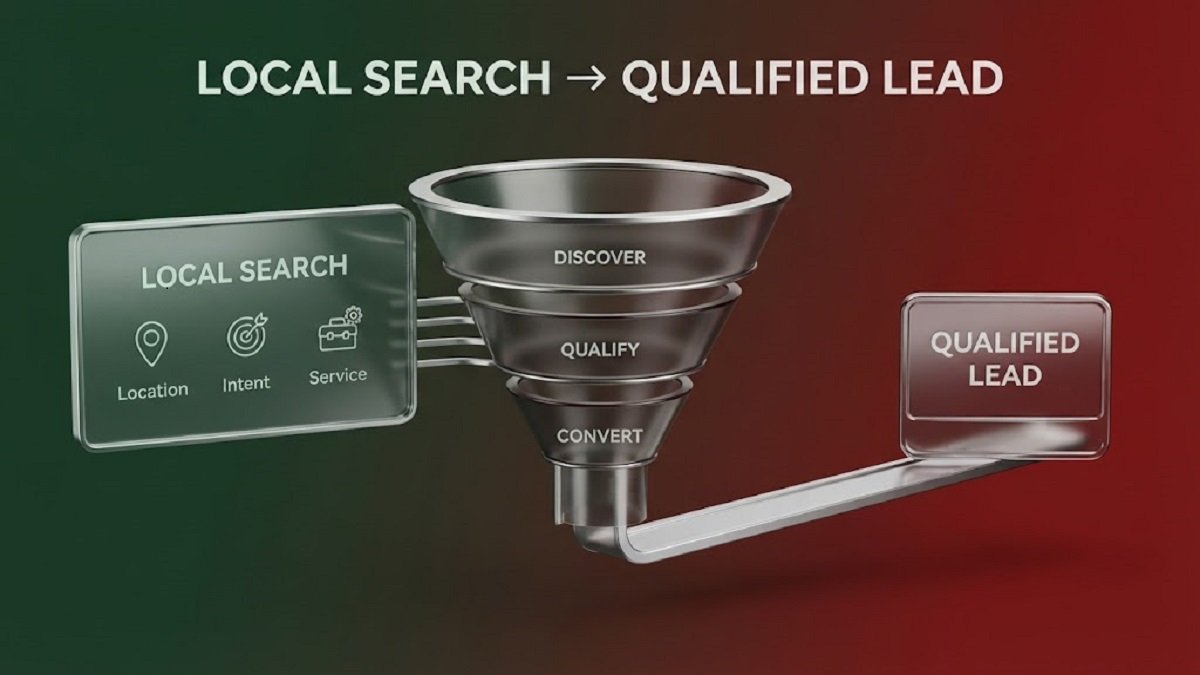
One of the most useful ways to evaluate local SEO is to connect search activity with lead generation.
Important signals can include:
-
Organic calls
-
Website form submissions
-
Appointment requests
-
Direction requests
-
Quote requests
-
Service-page conversions
-
Google Business Profile interactions
-
New customer inquiries
-
Qualified leads generated from local search
These metrics provide more context than rankings alone.
For example, an increase in local search visibility becomes more meaningful when it is followed by an increase in qualified service inquiries.
The goal is not to ignore rankings. Rankings remain useful indicators of search visibility. The goal is to place them within a larger measurement framework.
Search Intent Determines the Value of Visibility
Not every local search carries the same business value.
A person searching for general information may be several steps away from becoming a customer. Someone searching for a specific service in a specific location may have much stronger commercial intent.
This means businesses should analyze which searches generate visibility, not simply how much visibility they receive.
For example, ranking for a high-volume informational query may generate substantial traffic but limited revenue. Meanwhile, ranking for a lower-volume service-specific query may produce fewer visitors but significantly more qualified leads.
Local SEO performance should therefore be evaluated according to intent, relevance, and conversion potential.
Track Lead Quality, Not Just Lead Quantity
Another common measurement problem is focusing entirely on the number of leads generated.
Ten inquiries are not necessarily more valuable than five.
If the five inquiries come from customers who need the exact service, operate within the company's service area, and are ready to buy, they may create considerably more business value.
This is why local SEO reporting should include lead quality.
Businesses can evaluate:
-
Service fit
-
Location fit
-
Customer intent
-
Estimated deal value
-
Conversion rate
-
Sales-qualified leads
-
Closed customers
-
Revenue generated
This creates a stronger connection between SEO activity and financial outcomes.
Revenue Attribution Makes Local SEO More Measurable
Attribution is one of the more difficult parts of local search marketing because customers rarely follow a perfectly linear journey.
A customer may discover a business through Google, visit the website later, return through a branded search, call directly, and eventually become a customer.
If the business only measures the final interaction, the contribution of local SEO may be underestimated.
A more useful measurement system considers the different touchpoints that influence the customer journey.
For local businesses, this can include:
Search visibility → Business discovery → Website visit → Engagement → Lead → Qualified opportunity → Customer → Revenue
This framework makes it easier to understand how search contributes to business growth.
Conversion Rates Reveal What Rankings Hide
Suppose a local business moves from page two to the top three positions and experiences a significant increase in website traffic.
These differences demonstrate why ranking higher is not enough when the objective is measurable business growth.
That sounds positive.
But if conversion rates decline, the additional traffic may not be producing proportional business value.
This is why SEO analysis should compare visibility with downstream metrics.
A useful measurement framework can examine:
| SEO Signal | Business Question |
|---|---|
| Rankings | Are we becoming more visible? |
| Impressions | Are more people seeing the business? |
| Clicks | Are searchers choosing the business? |
| Engagement | Are visitors finding relevant information? |
| Leads | Are visitors taking commercial actions? |
| Qualified Leads | Are those inquiries relevant? |
| Customers | Are leads becoming customers? |
| Revenue | Is SEO contributing measurable financial value? |
This approach prevents businesses from treating one metric as the complete picture.
Local SEO Should Be Connected to Business Goals
The right local SEO measurement framework depends on the business model.
A home service company may care about phone calls and quote requests. A professional service firm may focus on consultation bookings. A medical practice may measure appointment requests. A multi-location company may evaluate performance by market, service category, and location.
Therefore, there is no single local SEO metric that defines success for every business.
The measurement system should start with the business objective and work backward toward search data.
For example:
Business Goal → Customer Action → Conversion Signal → Search Source → SEO Activity
This makes reporting more useful because every SEO metric has a business context.
Build a Local SEO Measurement Framework
A practical measurement framework can be organized into four levels.
1. Visibility
Measure how often and where the business appears in relevant local searches.
Examples include:
-
Local rankings
-
Search impressions
-
Map visibility
-
Branded search growth
-
Non-branded search visibility
2. Engagement
Measure what users do after discovering the business.
Examples include:
-
Website visits
-
Service-page engagement
-
Business profile interactions
-
Click-to-call actions
-
Website navigation
3. Lead Generation
Measure whether search visibility creates meaningful commercial opportunities.
Examples include:
-
Calls
-
Forms
-
Bookings
-
Quote requests
-
Consultation requests
4. Business Outcomes
Measure what ultimately matters to the organization.
Examples include:
-
Qualified opportunities
-
New customers
-
Customer acquisition cost
-
Average deal value
-
Revenue from organic and local search
-
Customer lifetime value
This four-level model creates a clearer relationship between SEO performance and business impact.
Why Ranking Higher Is Not Enough for Competitive Markets
In competitive local markets, ranking improvements can be difficult to translate into sustainable growth.
Competitors may increase their visibility, customer reviews may influence decision-making, search behavior may change, and Google may display different result types depending on query context.
As a result, maintaining a high position does not automatically guarantee consistent lead generation.
Businesses need to understand why they are visible, which searches create valuable opportunities, and what happens after the click or interaction.
This is especially important for companies operating across multiple services or locations, where overall ranking averages can hide significant differences in performance.
The Future of Local SEO Measurement Is Business-Centered
Local SEO measurement is moving toward a more complete understanding of customer demand.
Instead of asking only whether a business ranks, marketers increasingly need to understand:
-
Which searches create qualified demand?
-
Which locations generate the strongest opportunities?
-
Which services attract the most valuable customers?
-
Which landing pages convert search traffic?
-
Which search interactions contribute to revenue?
-
Where are potential customers being lost?
These questions turn SEO reporting from a ranking report into a business intelligence process.
The objective is not to eliminate ranking data. It is to understand what ranking data actually means for the business.
Why Ranking Higher Is Not Enough comes down to one fundamental principle: visibility is valuable only when it contributes to meaningful customer outcomes.
Why ranking higher is not enough becomes clear when businesses look beyond search positions and focus on the complete customer journey. Higher rankings can improve local search visibility, but visibility alone does not guarantee qualified leads, conversions, new customers, or revenue.
Why ranking higher is not enough also matters because not every search generates the same level of commercial value. Businesses need to evaluate search intent, local SEO performance, lead quality, conversion rates, customer acquisition, and revenue attribution to understand whether their search visibility is producing meaningful results.
Ultimately, why ranking higher is not enough is a question about business impact. A strong local SEO strategy should connect rankings with real customer actions and measurable business outcomes. When companies measure local search rankings, qualified leads, conversions, customers, and revenue together, they can gain a much clearer understanding of the true value of their SEO investment.