Beyond Position Tracking: Measuring the Relationship Between Local SEO Signals and Qualified Service Leads
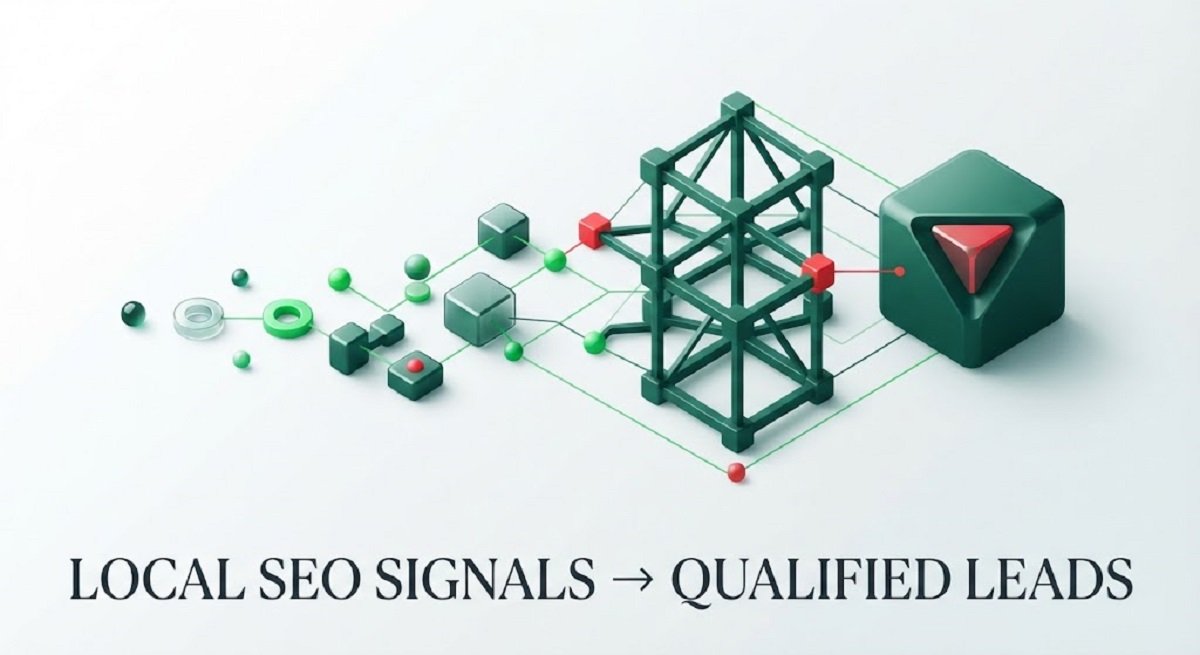
Position tracking is a common way to measure local SEO performance. However, local SEO signals can tell businesses much more about how their search visibility connects with real customer actions and qualified service leads. Rankings are useful, but they do not always show whether a business is attracting the right customers or generating meaningful service inquiries.
Position tracking is a common way to measure local SEO performance. Businesses often look at where they rank on Google and assume that higher rankings mean better results.
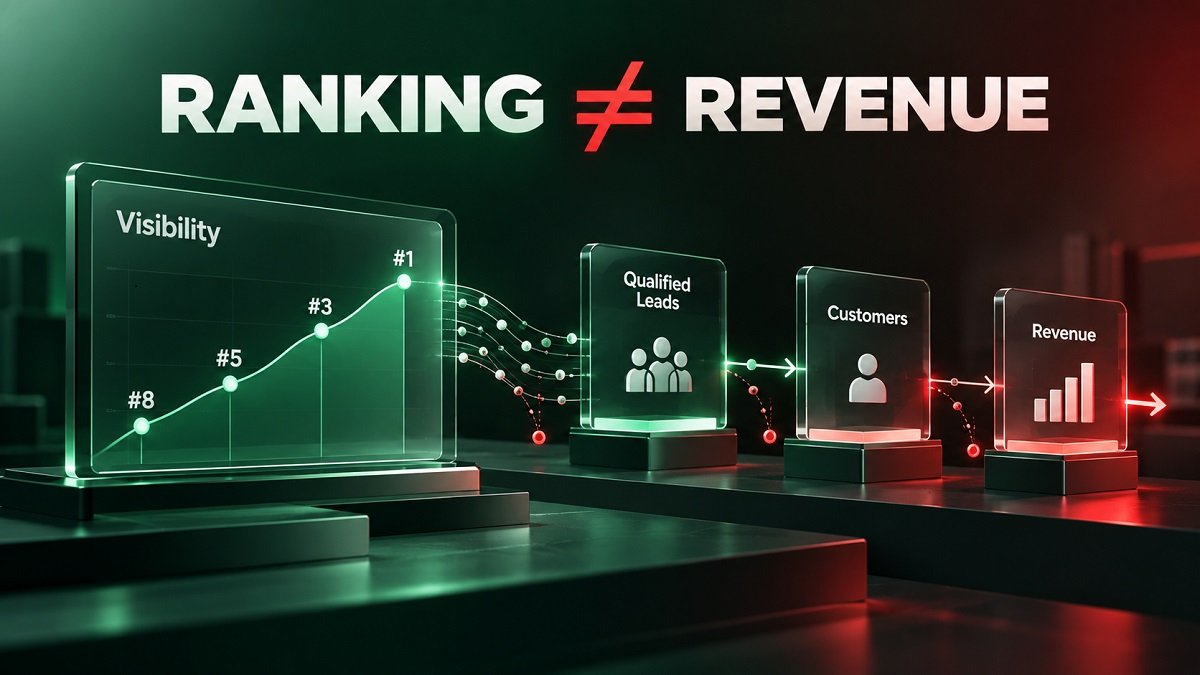
But rankings tell only part of the story.
A business can rank well for important local searches and still receive few qualified leads. On the other hand, a business may not hold the top position for every keyword but can generate strong calls, form submissions, bookings, and service inquiries.
That is why businesses need to look beyond position tracking.
The real goal of local SEO is not simply to improve rankings. It is to connect local SEO signals with meaningful business outcomes, especially qualified service leads.
What Are Local SEO Signals?
Local SEO signals are the different factors that help search engines understand a business, its location, its services, and its relevance to local searchers.
These signals can include:
-
Google Business Profile information
-
Business name, address, and phone number
-
Local website content
-
Service and location pages
-
Customer reviews
-
Local links and mentions
-
On-page SEO signals
-
Geographic relevance
-
Business categories
-
User engagement signals
Search engines use many signals together to understand which businesses may be useful for a particular local search.
However, not every signal has the same effect on lead generation.
For example, getting more visibility for a broad keyword may increase impressions without producing more customers. A more specific service-related search may generate fewer impressions but attract people who are ready to contact a business.
Why Rankings Alone Are Not Enough
Rankings are useful because they show how visible a business is for selected searches.
However, rankings do not directly measure lead quality.
Consider two businesses.
Business A ranks near the top for a broad local keyword and receives thousands of impressions. However, many searchers are only looking for general information.
Business B receives fewer impressions but appears for highly relevant service searches. Those visitors are actively looking for a provider and are more likely to call or submit a form.
If you only track rankings, Business A may appear to be performing better.
But when you measure qualified leads, the picture can be very different.
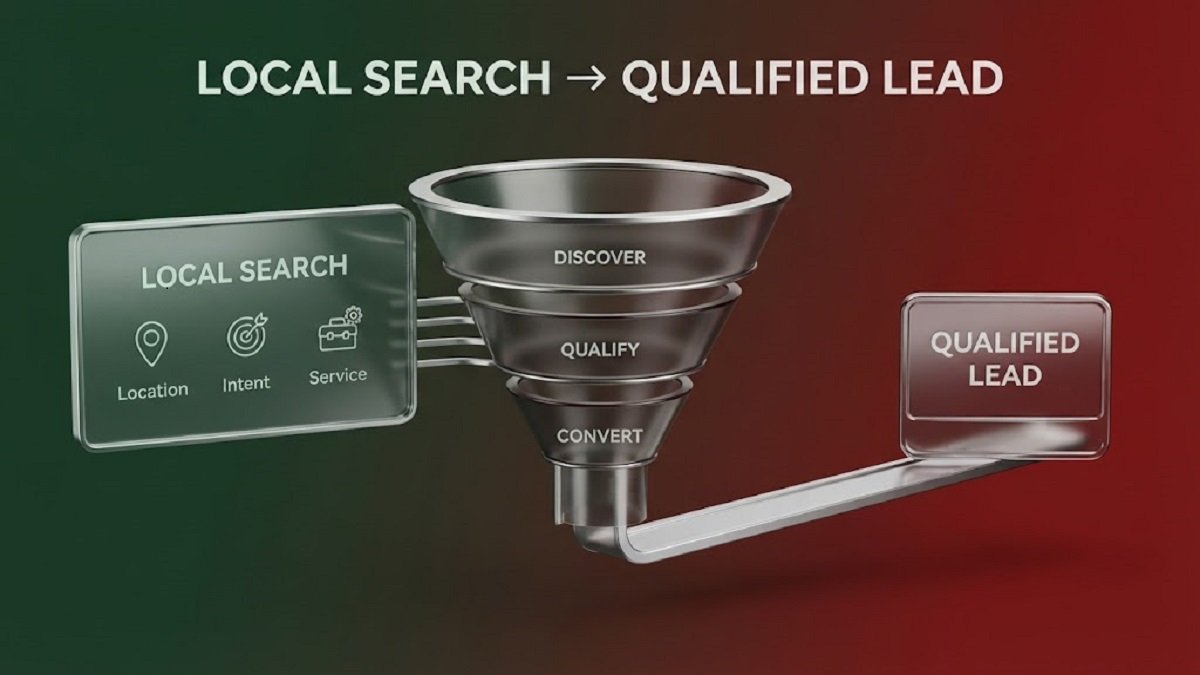
This is why local SEO measurement should connect search visibility, user intent, engagement, and conversions.
From Search Visibility to Qualified Leads
A useful local SEO measurement process can be viewed as a simple journey:
Local SEO Signals → Search Visibility → Relevant Traffic → Engagement → Qualified Leads → Business Opportunity
Each stage provides different information.
1. Local SEO Signals
First, measure the signals that support local visibility.
This includes business information, local content, reviews, location relevance, service pages, and other SEO elements.
2. Search Visibility
Next, look at how often the business appears in relevant local searches.
Useful measurements can include:
-
Local search impressions
-
Keyword visibility
-
Google Maps visibility
-
Search position
-
Visibility for service-related queries
3. Relevant Traffic
Visibility does not automatically mean useful traffic.
Look at whether visitors are reaching the website through searches that match the services the business actually provides.
For example, a plumbing company should pay close attention to searches related to plumbing services rather than only tracking broad location-based keywords.
4. Engagement
Once visitors reach the website or Business Profile, measure what they do.
Depending on the business, useful engagement actions may include:
-
Phone calls
-
Contact form submissions
-
Appointment requests
-
Quote requests
-
Direction requests
-
Service page visits
-
Booking actions
5. Qualified Leads
The next step is to determine whether those actions represent real business opportunities.
A qualified lead is more valuable than a simple website visit because it has a meaningful connection to the company's services.
For example, someone requesting a quote for a service is generally more valuable to a service business than someone who only reads a blog post.
The Difference Between a Lead and a Qualified Lead
Not every conversion has the same business value.
A website may generate 100 form submissions, but some may be spam, job inquiries, unrelated questions, or people outside the service area.
This is why businesses should separate total leads from qualified service leads.
A basic measurement system can track:
Total Leads → Relevant Leads → Qualified Leads → Sales Opportunities
This creates a clearer picture of local SEO performance.
For example, instead of asking:
"Did our rankings improve?"
A business can ask:
"Did our local visibility produce more relevant service inquiries?"
That question is much closer to the actual business objective.
Measuring Local SEO Signals Against Lead Quality
The next step is connecting local SEO signals with lead quality.
This does not mean assuming that one specific signal directly causes every lead. Local search performance is influenced by multiple factors.
Instead, businesses can compare changes in visibility with changes in lead activity over time.
For example, consider these measurements:
| Metric | What It Helps Measure |
|---|---|
| Local rankings | Search visibility |
| Google Maps visibility | Local discovery |
| Organic traffic | Search-driven visits |
| Service page traffic | Service-related interest |
| Calls | Direct inquiries |
| Form submissions | Lead activity |
| Qualified leads | Lead quality |
| Bookings | Commercial intent |
Looking at these metrics together gives businesses more useful information than rankings alone.
Service Pages Matter for Lead Measurement
Local businesses should also pay attention to the relationship between service pages and leads.
A location page may attract visitors who want general information about an area. A specific service page can attract people who already know what they need.
For example, a searcher looking for "emergency HVAC repair near me" has a different level of intent from someone searching for "HVAC companies."
This is why businesses should measure which pages contribute to qualified inquiries.
Important measurements include:
-
Organic visits to service pages
-
Calls from service pages
-
Form submissions
-
Conversion rate
-
Service-specific inquiries
-
Geographic relevance of leads
This helps identify which areas of a website are supporting real business opportunities.
Google Business Profile and Local Lead Quality
Google Business Profile can also play an important role in local search visibility.
A complete and accurate profile helps users understand what a business offers, where it operates, and how to contact it.
Businesses can monitor actions such as:
-
Website visits
-
Phone calls
-
Direction requests
-
Profile interactions
-
Customer reviews
-
Search visibility
However, these numbers should still be connected to lead quality.
For example, an increase in phone calls may look positive. But businesses should also determine how many of those calls were related to actual services, came from the correct service area, and created genuine sales opportunities.
Reviews Can Support Local Trust
Reviews are another important part of the local search environment.
Potential customers often use reviews to evaluate businesses before contacting them.
However, review quantity alone does not tell the entire story.
Businesses can also examine:
-
Review quality
-
Recent review activity
-
Service-related feedback
-
Customer sentiment
-
Responses from the business
A strong review profile can support trust when a potential customer is comparing local service providers.
Location and Search Intent
Local search performance also depends on location and intent.
Two people searching for the same service may see different results because they are in different locations.
For this reason, businesses should avoid relying on a single ranking position as the complete picture of local performance.
Instead, track visibility across relevant locations and search contexts where possible.
More importantly, connect that visibility to actual service inquiries.
This creates a more useful measurement framework:
Location → Search Intent → Visibility → Engagement → Qualified Lead
How to Build a Better Local SEO Measurement System
A practical measurement system does not need to be complicated.
Start by identifying the business's most important services and locations.
Then track the following areas.
Step 1: Define Important Services
List the services that generate the most valuable business opportunities.
These services should become the foundation of your local SEO measurement.
Step 2: Identify Relevant Local Searches
Track searches that reflect real customer needs.
Include service-related and location-based search terms instead of focusing only on broad keywords.
Step 3: Track Visibility
Monitor local rankings, Maps visibility, and organic search performance.
Remember that rankings are a visibility metric, not a final business outcome.
Step 4: Measure Conversion Actions
Track calls, forms, bookings, quote requests, and other meaningful actions.
Step 5: Review Lead Quality
Determine which conversions become genuine service opportunities.
This is where SEO data becomes more useful for business decisions.
Step 6: Compare SEO Data With Business Results
Finally, compare local SEO performance with lead and sales data.
Look for patterns rather than assuming that one metric explains everything.
Common Measurement Mistakes
Many businesses make the same mistakes when measuring local SEO.
Focusing Only on Rankings
Ranking improvements are useful, but they do not guarantee more qualified leads.
Measuring Traffic Without Intent
More traffic is not always better if visitors are not interested in the services offered.
Counting Every Conversion Equally
A spam form and a high-value service inquiry should not be treated as the same type of lead.
Ignoring Offline Conversions
Some local customers discover a business online but complete the buying process through a phone call or in-person visit.
Looking at Data in Isolation
A single metric rarely explains local search performance.
Businesses should review rankings, traffic, engagement, lead quality, and business outcomes together.
A Better Way to Think About Local SEO Performance
The purpose of local SEO measurement should be to understand the relationship between search visibility and real customer demand.
Instead of asking only:
"Where do we rank?"
Ask:
"Are our local SEO signals helping us reach the right customers and generate qualified service leads?"
That shift changes how businesses evaluate SEO.
Rankings still matter. Traffic still matters. Google Business Profile activity still matters.
But these metrics become more valuable when they are connected to meaningful actions and qualified opportunities.
Key Takeway
Local SEO success is about more than achieving a higher position in search results.
A business needs to understand whether its local SEO signals are helping it reach relevant customers, generate meaningful engagement, and create qualified service leads.
Position tracking provides useful visibility data, but it should be only one part of the measurement process.
By connecting local SEO signals, search intent, visibility, engagement, and lead quality, businesses can develop a clearer understanding of what their local search strategy is actually contributing to the business.
The goal is not simply to rank higher.
The goal is to turn relevant local visibility into meaningful business opportunities.