Beyond Website Traffic: Digital Marketing Services That Turn Visitors Into Customers
Digital Marketing Services play an important role in turning website visitors into paying customers. While attracting traffic is an important marketing goal, traffic alone does not guarantee business growth. A website can receive thousands of visitors and still generate very few inquiries, bookings, or sales. The real challenge is connecting the right audience with relevant offers, building trust, and creating a clear path toward conversion.
This is where Digital Marketing Services become valuable. The right strategy connects visibility with customer intent, builds trust, removes conversion barriers, and guides potential customers toward taking action.
For a local service provider, success might mean receiving more qualified phone calls. For an online retailer, it could mean increasing completed purchases. A professional services company may prioritize consultation requests from customers who are ready to buy.
Each business has different goals, which means marketing decisions should be based on customer behavior rather than traffic numbers alone.
Understanding which services influence the customer journey helps businesses invest more effectively, improve conversion rates, and build a more predictable path from website visits to revenue.
Why Website Traffic Does Not Always Generate Customers
Website visitors arrive with different needs, expectations, and levels of buying intent. Some are researching a problem, others are comparing providers, and a smaller group may already be ready to purchase.
A website that attracts the wrong audience can experience high traffic without producing meaningful leads. Even relevant visitors may leave if they cannot understand the offer, find trustworthy information, or determine what to do next.
Common conversion problems include unclear messaging, slow-loading pages, confusing navigation, weak calls to action, and insufficient evidence of credibility.
For example, a homeowner searching for an emergency plumber needs clear service information, a reliable contact method, and confidence that the company serves the right area. A general article about plumbing may attract that visitor, but it will not necessarily generate a booking.
Effective Digital Marketing Services address these gaps by aligning audience targeting, website experience, and conversion opportunities.
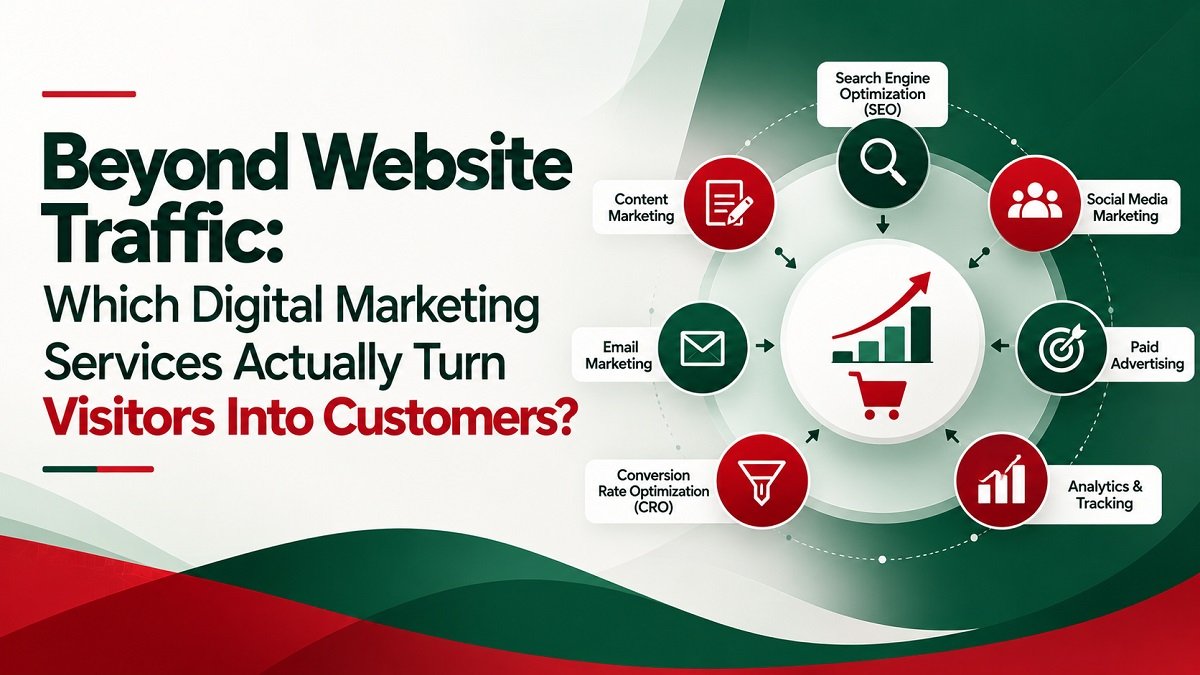
1. Search Engine Optimization That Attracts High-Intent Visitors
Search engine optimization helps businesses reach people who are actively looking for relevant products, services, or solutions. However, attracting visitors is only part of the objective. The pages must also match the intent behind each search.
A business targeting commercial cleaning clients, for example, should create useful service pages that explain its offerings, coverage areas, process, and qualifications. Someone searching for a commercial cleaning provider has different needs from someone researching how to clean an office independently.
A focused SEO strategy includes keyword research, search-intent analysis, technical improvements, relevant content, and internal linking. These activities help search engines understand the website while making it easier for prospective customers to find useful information.
For businesses serving specific geographic areas, Local SEO can support discovery through location-based searches and business listings. Accurate business information, relevant location pages, and a well-maintained Google Business Profile can help potential customers evaluate available providers.
The commercial value comes from connecting the right search with the right landing page. When visitors find relevant answers and a clear next step, they have a stronger reason to contact the business.
2. Conversion Rate Optimization That Makes Every Visit More Valuable
Conversion rate optimization (CRO) focuses on increasing the percentage of visitors who complete a desired action. Rather than relying entirely on acquiring more traffic, businesses can examine why existing visitors leave without converting.
A CRO process typically begins with analytics, user behavior analysis, landing-page reviews, and form testing. The objective is to identify friction and make important actions easier.
Consider a consulting company whose website receives consistent traffic but generates few consultation requests. Its contact form might ask for unnecessary information, the service description might be vague, or the primary call to action might be difficult to notice.
Improving the form, clarifying the offer, and placing a relevant call to action near key information may help more qualified visitors take the next step.
Businesses should test changes instead of assuming that a particular design will perform better. Useful experiments can include comparing headlines, button wording, page layouts, and form lengths.
Conversion rate optimization works especially well when supported by analytics and clear measurement. It helps businesses understand not only how many people visit a page, but also how effectively that page supports the intended business outcome.
3. Landing Pages That Connect Customer Intent With a Clear Offer
A landing page gives a specific audience a focused path toward a particular action. It may encourage visitors to request a quote, schedule a consultation, register for a service, or purchase a product.
Generic pages often underperform when they attempt to serve multiple audiences at once. A visitor arriving from an advertisement for roof replacement should not have to search through unrelated services to find the relevant offer.
Strong landing pages typically include a clear headline, a specific value proposition, relevant benefits, credibility indicators, and a visible call to action. They should also answer practical questions about pricing, service availability, delivery, or the next step whenever appropriate.
For local businesses, dedicated service pages can explain which neighborhoods are covered, what the service includes, and how customers can request assistance.
Professional Digital Marketing Services connect campaigns with appropriate landing pages instead of directing every visitor to the homepage. This creates a more consistent experience between the promise made in an advertisement or search result and the information presented on the website.
4. Reputation Management That Builds Customer Confidence
Potential customers rarely evaluate a business based on website content alone. They may compare customer reviews, examine ratings, read testimonials, and look for evidence that a company delivers on its promises.
Online reputation management helps businesses monitor customer feedback, respond professionally, identify recurring concerns, and improve the customer experience.
For example, a home improvement company may receive positive feedback about workmanship but repeated complaints about delayed communication. Addressing that operational issue can improve customer satisfaction and strengthen future customer relationships.
Reputation management should be treated as an ongoing business process rather than an attempt to collect positive ratings at any cost. Businesses should request honest feedback, follow applicable platform policies, and respond constructively to criticism.
This work can support conversion performance because trustworthy, relevant information helps potential buyers make more confident decisions. It can also reveal issues that website analytics alone cannot explain.
However, positive reviews do not guarantee rankings or sales. Their value depends on how they contribute to customer understanding, credibility, and the overall buying experience.
5. Paid Advertising That Reaches Customers Ready to Act
Paid search and other digital advertising channels can help businesses reach targeted audiences without waiting for organic visibility to develop.
Search advertising is particularly useful when potential customers express clear commercial intent. A person searching for an emergency electrician may need immediate assistance, while someone researching electrical safety may be looking for general information.
Effective campaigns align keywords, audience targeting, ad messaging, budgets, and landing pages. They also exclude irrelevant searches where appropriate to reduce wasted spending.
For local service providers, geographic targeting can help concentrate advertising on areas the business actually serves. Campaigns should reflect service availability and realistic travel or delivery boundaries.
Paid advertising requires careful financial measurement. Clicks and impressions show exposure, but qualified leads, booked appointments, customer acquisition cost, and revenue provide stronger evidence of business value.
Businesses should also track lead quality. A campaign generating many inquiries may still be inefficient if most prospects are outside the service area or cannot afford the offering.
When campaign data reveals which audiences and offers convert, businesses can use those insights to improve landing pages and other marketing activities.
6. Email Marketing and Lead Nurturing That Recover Missed Opportunities
Not every visitor is ready to purchase during the first interaction. Some need additional information, time to compare providers, or approval from another decision-maker.
Email marketing helps businesses maintain relevant communication with prospects who have voluntarily subscribed or otherwise provided appropriate permission to be contacted.
Useful campaigns might include educational resources, service explanations, product updates, appointment reminders, or follow-up messages for legitimate inquiries.
For example, a B2B software company may need several conversations before a prospect becomes a customer. A helpful email sequence can answer common objections and explain the benefits of the solution without pressuring the recipient.
Segmentation improves relevance by allowing businesses to tailor messages to different interests, customer stages, or previous interactions.
Lead nurturing is most effective when it provides genuine value and includes a clear next step. Businesses should respect consent requirements, honor unsubscribe requests, and avoid sending irrelevant messages.
By maintaining appropriate communication, companies can help interested prospects move toward a decision instead of treating every non-converting visit as a lost opportunity.
7. Analytics and Lead Tracking That Connect Marketing With Revenue
Marketing decisions become more reliable when businesses can connect website activity with meaningful outcomes.
Analytics tools can show which pages visitors use, where they arrive from, and which actions they complete. Call tracking, form tracking, customer relationship management systems, and sales records can add further context.
A local service business, for example, might discover that organic search generates fewer leads than paid advertising but produces a higher percentage of qualified customers. Looking only at traffic volume would miss that distinction.
Useful performance indicators include:
-
Qualified leads and completed inquiries
-
Landing-page conversion rates
-
Cost per qualified lead
-
Customer acquisition cost
-
Appointment and sales conversion rates
-
Revenue attributed to marketing channels
Attribution is not always straightforward. Customers may interact with multiple channels before purchasing, and tracking systems can have limitations. Businesses should interpret reports carefully rather than assuming that every conversion belongs to a single source.
Well-measured Digital Marketing Services allow teams to identify effective activities, reduce waste, and make budget decisions based on business outcomes.
How to Choose the Right Services for Your Business
The best combination depends on the business model, customer journey, budget, and current performance challenges.
If the website attracts very few qualified visitors, SEO, a targeted Local SEO strategy, or paid advertising may be appropriate.
Start by identifying the main bottleneck. If the website attracts very few qualified visitors, SEO or targeted advertising may be appropriate. If traffic is strong but inquiries are weak, conversion optimization and landing-page improvements may deserve priority.
If prospects hesitate because they lack confidence, review management and stronger credibility signals may help. If interested customers require time to make decisions, email nurturing can support the buying process.
Businesses should evaluate potential providers based on their understanding of commercial goals, reporting practices, technical capabilities, and willingness to explain how success will be measured.
Avoid selecting services simply because they are popular. A clear strategy, consistent execution, and reliable measurement are more valuable than a large collection of disconnected marketing activities.
Turning Marketing Into Measurable Results
Turning website visitors into customers requires more than attracting attention. Businesses need relevant search visibility, persuasive landing pages, trustworthy information, efficient conversion paths, and accurate performance measurement.
SEO and paid advertising can attract potential buyers, while conversion optimization helps them take action. Reputation management supports customer confidence, email nurturing maintains relationships, and analytics connects marketing activity with business results.
The most effective Digital Marketing Services work together around a clearly defined commercial objective. Instead of judging success solely by traffic growth, businesses should evaluate whether their marketing generates qualified opportunities, improves customer acquisition, and contributes to sustainable revenue.
When every activity supports a specific stage of the customer journey, a website becomes more than a source of visitors. It becomes a more effective part of the business's customer acquisition system.
Frequently Asked Questions
Which Digital Marketing Services are best for generating customers?
SEO, conversion rate optimization, paid advertising, landing-page optimization, reputation management, and lead nurturing can all contribute. The best combination depends on the audience, offer, and main conversion barrier.
Can Digital Marketing Services increase sales without increasing website traffic?
Yes. Improving page relevance, simplifying forms, strengthening credibility, and clarifying calls to action may help a business convert a greater share of its existing visitors. Results depend on the quality of the traffic and the changes made.
How does Local SEO help local businesses attract customers?
Local SEO helps businesses improve their visibility in relevant geographic searches and maintain accurate business information. Relevant service pages and business listings can help potential customers discover and evaluate local providers.
How long does it take to see results from digital marketing?
Timelines vary by channel, competition, budget, website condition, and business goals. Paid advertising may generate inquiries relatively quickly, while organic search improvements often require sustained work. Conversion improvements also depend on testing and implementation.
How should a business measure marketing success?
Track qualified leads, conversion rates, customer acquisition cost, appointments, sales, and revenue alongside traffic. These measures provide a more useful picture of commercial performance than visitor counts alone.