
AI Search Visibility: Tracking Brand Mentions, Accuracy, and Reputation Beyond Traditional Rankings
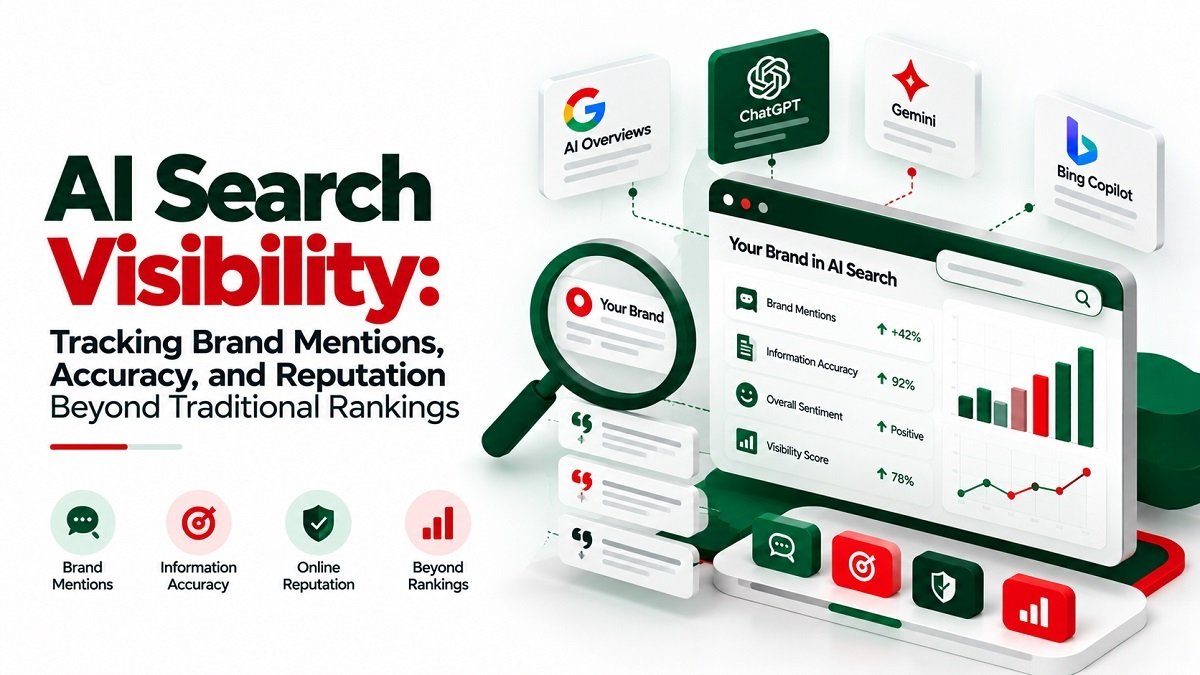
AI search visibility is becoming an important consideration for businesses that want to understand how customers discover and evaluate their brands. Traditional search tools can show website rankings, organic traffic, customer reviews, and backlinks. However, AI-generated answers introduce another layer of discovery. Customers may ask AI platforms to recommend a local service, compare competing businesses, or explain which company best meets their needs. Businesses also need to understand how they are described, whether the information is accurate, and which sources may influence those answers.
What Traditional Reputation Monitoring Tools Actually Measure
Traditional reputation monitoring software remains valuable because it helps businesses understand customer feedback and identify recurring concerns. Depending on the platform, these tools can collect reviews, track ratings, monitor public mentions, analyze sentiment, and notify teams when new feedback appears.
However, review monitoring alone cannot explain every way a business appears online. A customer might leave a positive review while an unrelated directory continues to display an outdated telephone number. A company may receive favorable comments on social media but remain absent from AI-generated answers about its industry.
AI search visibility adds another perspective by examining how brands appear in conversational search experiences. Instead of looking only at reviews or website positions, businesses can investigate whether they are mentioned in relevant answers, how their services are described, and whether important facts are represented correctly.
Why AI Search Requires Additional Monitoring Methods
Traditional search results usually present a list of pages that users can open and evaluate. AI-generated answers may summarize information, compare several providers, or present a recommendation without requiring the user to visit every source.
This changes what businesses need to monitor. A ranking report may show that a website performs well for a particular keyword, but it does not necessarily reveal whether an AI assistant mentions that company when answering a related customer question.
Businesses can create a consistent set of customer questions and check them across relevant AI search platforms. This repeatable process makes AI search visibility easier to assess. They should record whether the brand appears, how its services are presented, which competitors are mentioned, and whether citations or source references are available.
AI-generated responses can change with prompt wording, platform behavior, available information, and the time of testing. One response should not be treated as a permanent ranking or a complete picture of what every customer sees.
Tracking Brand Mentions Beyond Traditional Channels
Brand mentions can appear in many places beyond review websites and social media. Industry publications, professional directories, community discussions, comparison articles, and local business listings may all contribute to the information customers encounter when researching a company.
The important question is not simply how many times a brand appears. Businesses need to understand the context of those mentions. A detailed reference in a relevant industry publication may be more useful than several unrelated mentions. Similarly, an otherwise positive article can create confusion if it contains an incorrect service description or an outdated business address.
Monitoring AI search visibility can help teams investigate these patterns by recording where a business appears in relevant answers and identifying available source references. Where possible, teams should distinguish between official company information, independent editorial coverage, customer feedback, and third-party listings.
Local businesses should also examine the consistency of their location and service information. Accurate business profiles, relevant service pages, and clear contact details help customers verify what a company offers and where it operates.
This is a natural point to review the company's local SEO strategy. Local SEO supports the discoverability and consistency of location-specific business information, while broader monitoring helps teams identify potential gaps between what the company publishes and what customers encounter elsewhere. The two activities can support each other without treating traditional search rankings as the only measure of online presence.
Why Information Accuracy Matters as Much as Visibility
Being mentioned in an AI-generated answer does not automatically benefit a business. The description also needs to be accurate and relevant. An answer might refer to a service the company no longer provides, display outdated opening hours, confuse two businesses with similar names, or repeat an incorrect location.
These errors can affect customer decisions before a person ever visits the company's website. Someone looking for an emergency service may choose another provider if the available information suggests that the first business is closed. A potential client may also lose confidence if an AI-generated description conflicts with the company's official service page.
Businesses should establish a process for checking important facts. This step supports AI search visibility by helping teams identify descriptions that conflict with verified business information. Important details include the official business name, contact information, operating hours, service areas, current offerings, qualifications, and pricing information where applicable.
When a discrepancy appears, the next step is to investigate its possible source. The company may need to update its website, correct a business directory, or request a correction from a publisher. However, updating one source does not guarantee an immediate change across every AI platform.
Choosing the Right Monitoring Software
Selecting monitoring software requires more than checking whether a vendor advertises AI-related features. The platform should provide evidence that helps teams evaluate AI search visibility, not just a headline score. Businesses should examine what the software actually measures and whether its results support practical decisions.
First, review platform coverage. Does the software monitor the AI search experiences that matter to the business? Does it include relevant review sites, directories, or other public sources? Coverage varies, so companies should verify the details rather than assume every tool monitors the same channels.
Second, examine the quality of reporting. A single visibility score may be convenient, but it is more useful when teams can inspect the underlying answers, mentions, and available source references. Without that detail, it may be difficult to understand why a score changed or what action should follow.
Third, assess historical reporting and comparison features. Teams should be able to review changes over time, compare competitors using a consistent question set, and export findings for internal reports.
Businesses should also consider usability, pricing, integrations, data handling, and the time required to maintain the monitoring process. Ask vendors how their measurements are collected, how frequently they are refreshed, and which limitations apply.
Measuring Performance Without Relying on One Score
AI search visibility should be evaluated through several indicators rather than a single number. A useful framework can include brand mentions, citations, accuracy, competitor presence, and changes over time.
Brand mentions show whether a company appears in relevant answers. Citations, when available, indicate whether a website or another source is referenced. Accuracy checks establish whether the description matches verified information. Competitor comparisons help identify situations in which other businesses appear for the same customer questions.
Businesses should establish a baseline before making changes to their content or monitoring process. They can then repeat the same questions under documented conditions and compare results over time. It is also useful to record unexpected results separately from recurring patterns. A single unusual answer may reflect the wording of a prompt, while repeated discrepancies across several checks may point to a more persistent information gap. Keeping notes on the context helps decision-makers interpret results fairly.
This approach makes AI search visibility reporting more meaningful because it focuses on observable changes rather than assumptions about how a platform works. A monitoring report represents the prompts, platforms, and observations included in that report; it cannot guarantee that every customer will receive the same answer.
Connecting Monitoring Insights With Business Decisions
Monitoring has limited value if findings remain inside a dashboard. The real benefit comes when teams use the evidence to identify problems, improve information, and make better decisions.
Suppose an AI-generated answer repeatedly describes a company's service area incorrectly. The marketing team can check the website and business profiles, while the operations team confirms which locations the company currently serves. If the information is outdated, the business can correct the relevant sources and review the results during later monitoring.
A different situation may involve recurring complaints about response times. Although the issue appears in reputation data, the solution may require changes to staffing, scheduling, or customer communication rather than another marketing campaign.
This is where a coordinated reputation management program becomes useful. It can connect monitoring, issue ownership, response procedures, and follow-up reviews so that important findings reach the people who can address them. Marketing teams can identify patterns, customer service can investigate complaints, and operations can verify whether changes solve the underlying problem.
Businesses should prioritize issues according to customer impact, factual seriousness, frequency, and source credibility. A minor wording difference may not require action, while incorrect contact information or a misleading claim about an important service may need prompt attention.
Building a Consistent Monitoring Process
An effective monitoring process starts with clear questions. Businesses should select prompts that reflect genuine customer needs, including service comparisons, location-based requests, questions about expertise, and searches related to specific products or services.
Next, record the initial results. Note whether the business appears, how it is described, whether the available details are accurate, and which sources are referenced. Record the platform and date so that later comparisons have a clear context.
Finally, turn the results into an actionable report. Rather than simply stating that brand mentions increased, explain whether the company appeared in more relevant answers, whether important inaccuracies were corrected, or whether competitors were consistently present for valuable customer questions.
Review the process regularly. Changes in services, locations, customer concerns, and platform coverage may require new questions or adjustments to reporting. This keeps AI search visibility reviews relevant as business needs evolve. Documenting those changes helps prevent differences in methodology from being mistaken for genuine performance improvements. Teams should also share findings with people responsible for website content, customer communication, and service operations. This creates a clear path from monitoring to action and makes follow-up reviews more useful.
AI search is creating another way for customers to discover, compare, and evaluate businesses. Traditional rankings and reputation monitoring remain important, but they do not always reveal how a brand is represented in AI-generated answers or whether the information is accurate.
A practical approach combines brand-mention tracking, source review, factual verification, consistent testing, and action across relevant teams. It also recognizes that AI-generated responses can vary and that no monitoring tool can guarantee a particular recommendation.
For businesses serving US and UK audiences, the priority is to understand how the company appears in relevant customer discovery experiences and to correct information gaps wherever possible. When monitoring is connected to local information quality and a clear reputation management process, it becomes a useful source of insight for improving customer trust and making informed business decisions.
Frequently Asked Questions
-
1. What Is AI Search Visibility?
AI search visibility refers to how a business appears in AI-generated answers to relevant customer questions. It includes brand mentions, the accuracy of business information, and how the company is presented compared with competitors.
2. Can Traditional Reputation Monitoring Software Track AI Search Visibility?
Some monitoring platforms offer features for tracking AI search visibility, but their coverage varies. Businesses should check which AI platforms are supported, how results are collected, and whether individual answers and available source references can be reviewed.
3. Why Is AI Search Visibility Important for Local Businesses?
AI search visibility can help local businesses understand whether they appear in relevant service recommendations and whether their locations, opening hours, and service details are represented accurately. These insights can support improvements to business information and customer communication.
4. How Often Should Businesses Monitor AI Search Visibility?
The appropriate frequency depends on the business, its industry, and how quickly its information changes. Consistent checks using the same questions make it easier to identify