Designing a Local Search Funnel That Qualifies Leads Before Sales Gets Involved
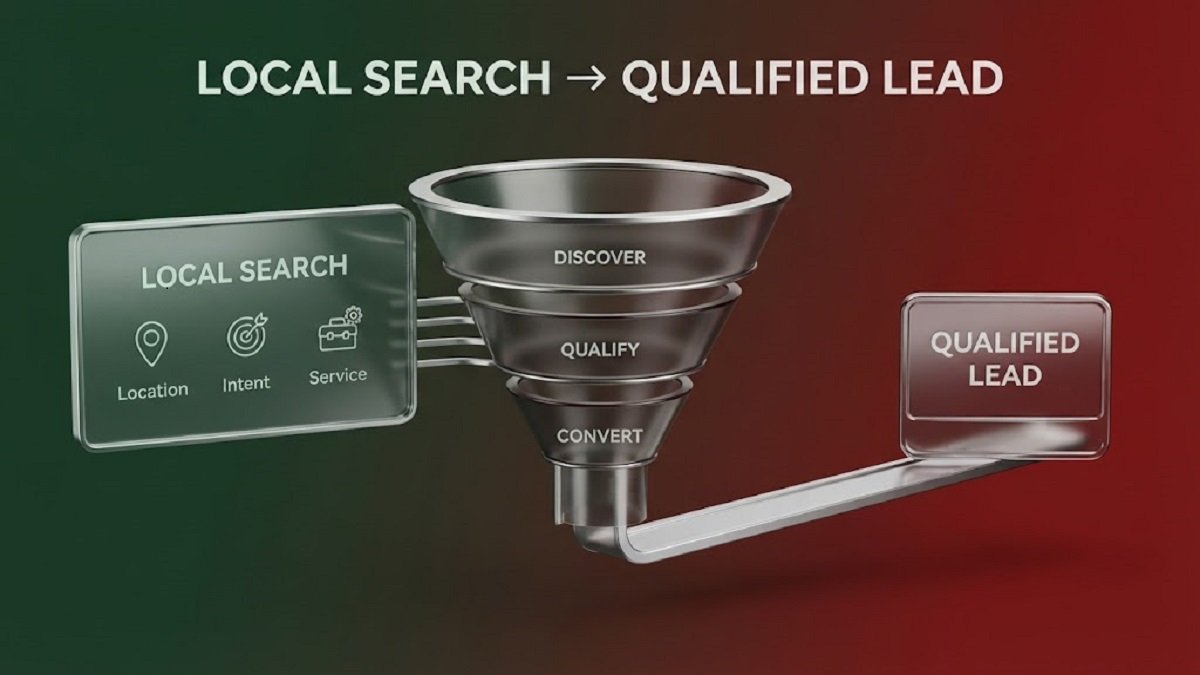
Local search can do more than generate visibility. A well-designed local search funnel can help businesses identify which prospects are more likely to become real customers before a salesperson ever gets involved. By connecting search intent, local relevance, website behavior, and conversion signals, businesses can create a clearer path from local discovery to qualified lead.
This is where a local search funnel becomes valuable.
Instead of treating every website visitor, phone call, or form submission as the same type of lead, businesses can build a system that uses search intent, service relevance, location, and on-site behavior to create stronger signals about lead quality.
The goal is not simply to attract more local traffic. It is to create a path where the right local prospects naturally move closer to conversion.
Why Local Traffic Does Not Always Mean Qualified Leads
A business can rank well in local search and still receive a large number of low-value inquiries.
Someone might search for a service because they are researching prices. Another person may be comparing providers. Someone else may be ready to schedule an appointment today.
All three people can enter through similar search results, but their commercial value can be very different.
That is why traffic volume alone is not enough.
A more useful approach is to examine what happens after the search.
Does the visitor land on the right service page?
Do they find information that matches their needs?
Do they interact with location-specific content?
Do they request a quote, make a call, or complete another meaningful action?
These signals help businesses understand whether their local search strategy is attracting attention or creating genuine demand.
A local search funnel helps businesses look beyond the number of vissitors coming from local search. It creats a structured path the connects the customers search intent with the right service ,location,webssite experience, and conversion opporrtunity.
Instead of treating every local visitors as an immediate saless leead, a local search funnel can identify stronger engagement signals along the customer journey. This gives businesses morre context before a prospect reaches the saless team.
Start With Search Intent, Not Just Keywords
A strong local search funnel begins before someone reaches the website.
The search query often provides an early indication of what the person wants.
For example, these searches carry different levels of commercial intent:
-
“roof repair options”
-
“roof repair cost”
-
“roof repair near me”
-
“emergency roof repair Brooklyn”
-
“roof repair company Brooklyn”
The topic may be similar, but the user's position in the buying journey is different.
This is where local SEO services can play a broader role than simply improving rankings. A well-structured strategy connects search intent with the right page, message, and conversion path.
Informational searches may need educational content.
Service-focused searches may need detailed service pages.
Location-specific searches may need strong local relevance and clear conversion options.
The funnel becomes more useful when each type of search has a logical next step.
Build the Funnel Around Commercial Relevance
A local search funnel should not force every visitor through the same journey.
Instead, create different paths based on what the visitor appears to need.
A simple structure might look like this:
Search → Relevant Landing Page → Engagement Signal → Qualification Action → Sales
The important part is the middle of the funnel.
A visitor who reads a service page for several minutes and then checks pricing information is giving different signals from someone who immediately leaves after viewing the homepage.
These actions can help businesses identify patterns in lead quality.
The objective is not to judge an individual visitor. It is to create a system that recognizes meaningful behavioral patterns across many visitors.
Match Search Queries With the Right Landing Pages
One common problem in local marketing is sending highly specific searches to generic pages.
Imagine someone searches for:
“Emergency HVAC repair in Austin.”
If that person lands on a general HVAC homepage, they may have to search again for emergency services, location information, availability, and contact options.
That creates unnecessary friction.
A stronger funnel would connect the search with a relevant page that immediately addresses:
-
The specific service
-
The target location
-
Common customer concerns
-
Service availability
-
Trust information
-
Clear next steps
The closer the landing page matches the original search intent, the easier it becomes for the visitor to continue.
Use On-Site Behavior as a Qualification Layer
Search data tells you how someone arrived.
Website behavior can provide additional context about what happens next.
Useful signals can include:
-
Service page visits
-
Location page interactions
-
Pricing-page visits
-
Quote requests
-
Appointment requests
-
Phone interactions
-
Form completions
-
Repeat visits
-
Content engagement
No single behavior should automatically define a lead as qualified.
Instead, businesses can combine multiple signals.
For example, a visitor who arrives through a high-intent local query, views a specific service page, checks pricing, and submits a quote request may represent a stronger commercial signal than someone who only visits a blog article.
This creates an important connection between local search visibility and lead qualification.
Create Qualification Points Before Sales
Sales teams often spend significant time responding to inquiries that are not ready to buy.
A well-designed search funnel can reduce some of that friction by introducing qualification points earlier.
For example, a service request form could ask:
-
What service do you need?
-
Where is the service required?
-
When do you need it?
-
What is the approximate project size?
-
What is your preferred contact method?
These questions do more than collect information.
They create useful context for the next stage of the customer journey.
Instead of receiving a basic message saying, “I need information,” the sales team may receive a request with enough detail to understand the opportunity before making contact.
Location Should Be More Than an Address
Local relevance is not created simply by adding a city name to a page.
A stronger local funnel connects location with actual customer demand.
For example, a multi-location business may discover that customers in different areas search for different services, use different terminology, or respond to different offers.
This creates an opportunity to build location-specific landing experiences.
Each location page can reflect:
-
Relevant services
-
Local customer needs
-
Service coverage
-
Nearby areas
-
Local proof points
-
Appropriate calls to action
The result is a more specific experience for the person searching.
Connect Search Data With Lead Data
This is where the funnel becomes much more useful for decision-making.
Search performance data might show:
-
Which queries generate visibility
-
Which locations generate traffic
-
Which pages receive organic visits
-
Which search themes are growing
Lead data can show:
-
Which sources generate inquiries
-
Which services generate opportunities
-
Which locations produce qualified leads
-
Which inquiries eventually become customers
Looking at these datasets separately can hide important patterns.
Connecting them can reveal whether search visibility is contributing to meaningful business outcomes.
For example, a service page might generate fewer visits than another page but produce more qualified inquiries.
That difference matters.
More traffic is not automatically more valuable traffic.
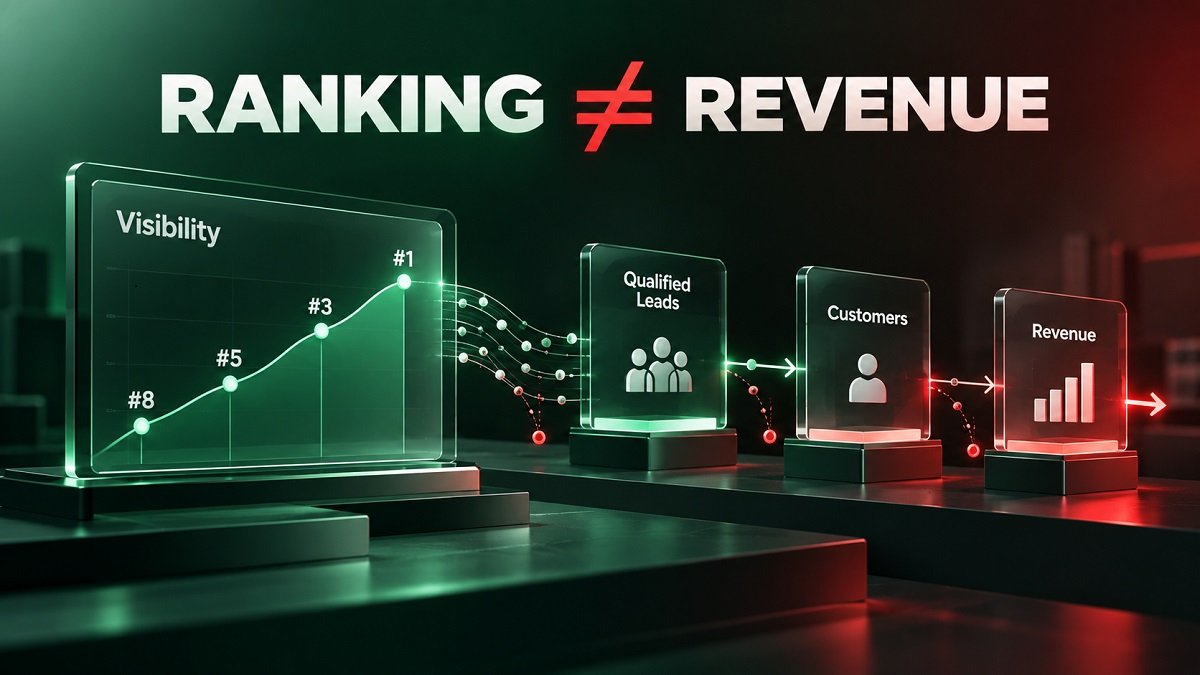
Measure the Funnel Beyond Rankings
Rankings still provide useful information, but they should not be the only measurement layer.
A more complete measurement framework can include:
Visibility → Engagement → Lead Qualification → Sales Opportunity → Revenue
This changes the question from:
“Are we ranking?”
to:
“What happens after people find us?”
That shift can make local search strategy more closely connected to business performance.
A business may discover that certain queries create strong engagement but few qualified leads. Another group of searches may generate fewer visitors but significantly more sales opportunities.
Those insights can guide future content, landing pages, conversion paths, and marketing investment.
Reduce Friction Between Search and Conversion
Even highly relevant traffic can disappear when the conversion process is difficult.
A local search funnel should make the next step obvious.
Depending on the business, that could mean:
-
Request a quote
-
Schedule a consultation
-
Book a service
-
Call the business
-
Check availability
-
Send a project inquiry
The call to action should match the visitor's intent.
Someone researching a complex service may not be ready to schedule immediately. A detailed guide or consultation option may make more sense.
Someone searching for an urgent service may need a direct phone or booking option.
The best funnel does not simply push visitors toward a conversion. It gives them the right next step for their situation.
Build Feedback From Sales Into the Funnel
The sales team should not be the final destination of the funnel.
Their feedback can improve the funnel itself.
Sales teams often notice patterns that analytics cannot fully explain.
They may know that certain inquiries are rarely serious. They may notice that customers from a particular location frequently request one service. They may also recognize that certain questions appear repeatedly before a customer decides to buy.
Those insights can feed back into:
-
Landing page content
-
FAQs
-
Service descriptions
-
Lead forms
-
Qualification questions
-
Calls to action
-
Local content strategy
This creates a continuous feedback loop:
Search Data → Website Behavior → Lead Data → Sales Feedback → Funnel Improvements
Over time, the funnel becomes more aligned with actual customer behavior.
The Real Value of a Local Search Funnel
A local search funnel is not simply another SEO structure.
It is a way to connect the customer's search journey with the business's qualification process.
The strongest systems do not focus only on generating more clicks. They create clearer connections between:
Search Intent → Local Relevance → Website Experience → Lead Quality → Business Opportunity
That perspective can help businesses move beyond the idea that local SEO is primarily about rankings.
The bigger opportunity is understanding what happens after the ranking produces the visit.
Final Takeaway
A local search strategy becomes more valuable when it is designed around the entire customer journey.
Search intent can guide the entry point. Relevant landing pages can reduce friction. Behavioral signals can provide additional context. Qualification steps can prepare leads for sales. And sales feedback can continuously improve the funnel.
The result is a more connected approach to local marketing—one that focuses not only on being discovered, but on creating meaningful opportunities from that discovery.