The Evolution of Local SEO Services: From Rankings to Revenue Intelligence
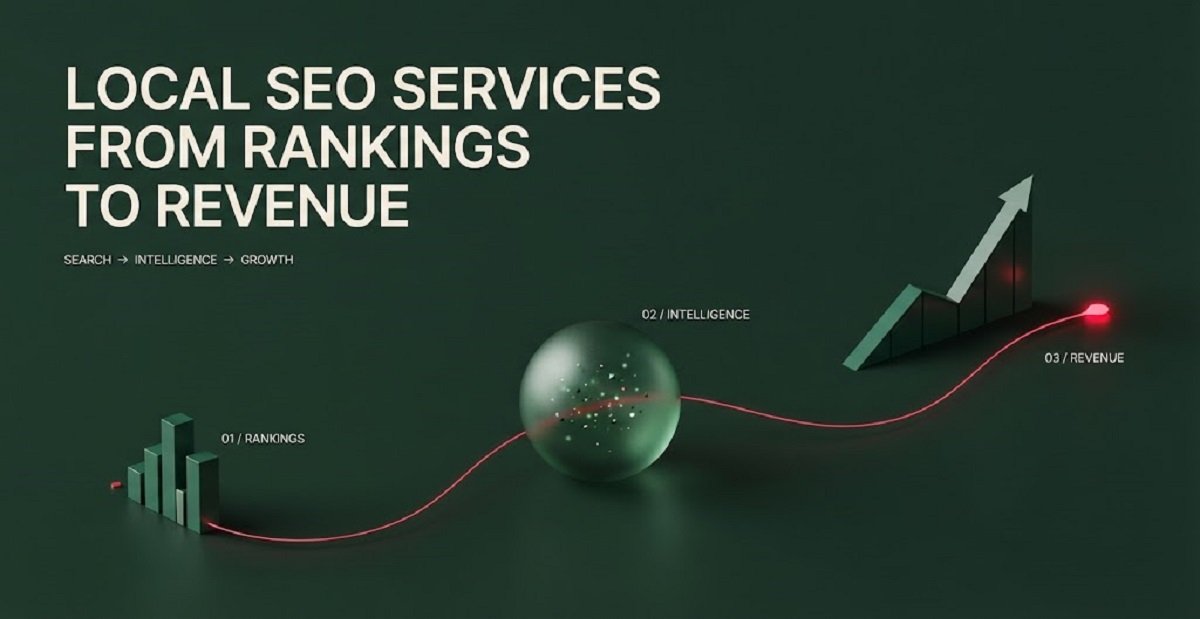
Local SEO services have changed significantly over the past decade. In the past, many businesses focused mainly on getting higher rankings on Google. Today, ranking alone is not enough. Businesses also need to understand customer intent, search behavior, lead generation, and how local search visibility contributes to real business revenue.
This shift has changed the role of local SEO services. Modern local SEO is no longer only about improving visibility. It is increasingly about understanding search behavior, customer intent, and the journey from search to revenue.
From Rankings to Real Business Outcomes
Traditional local SEO often focused on improving positions in Google Search and Google Maps.
Businesses tracked metrics such as:
-
Local keyword rankings
-
Google Maps visibility
-
Website traffic
-
Google Business Profile views
-
Citation consistency
-
Review volume
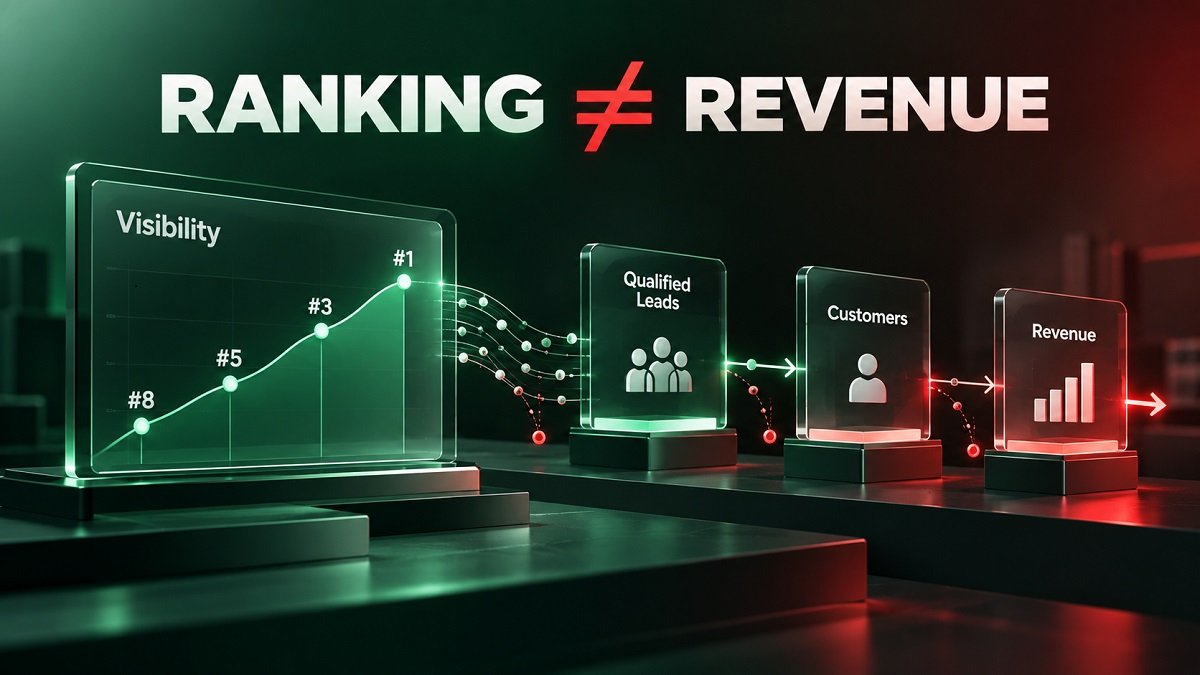
These metrics still matter. However, they do not always explain whether search visibility is producing business results.
For example, a business may rank well for several local keywords but receive very few qualified leads.
This creates an important question:
What happens after someone finds the business?
Modern local SEO services are increasingly focused on answering that question.
The Rise of Search Intent
Search engines have become much better at understanding what people want.
A customer searching for “plumber near me” may have a different level of intent from someone searching for “how to fix a leaking faucet.”
Both searches relate to plumbing, but the potential business value is different.
This is why understanding search intent has become an important part of local SEO.
Businesses need to understand:
-
What customers are searching for
-
Why they are searching
-
Where they are in the buying journey
-
Which searches indicate stronger commercial intent
-
What information they need before contacting a business
This helps businesses move beyond simply targeting keywords.
Local SEO Services Are Becoming More Data-Driven
Modern local SEO relies on more than keywords and backlinks.
Businesses can now analyze multiple signals across the customer journey.
These may include:
-
Search queries
-
Google Business Profile interactions
-
Website behavior
-
Phone calls
-
Form submissions
-
Location-based searches
-
Service-page engagement
-
Review activity
-
Conversion data
When these signals are connected, businesses can gain a clearer view of how local search contributes to customer acquisition.
This is where revenue intelligence becomes important.
What Is Revenue Intelligence in Local SEO?
Revenue intelligence means using available data to understand how marketing activity contributes to business outcomes.
In local SEO, this means looking beyond:
Search → Click
and examining the larger journey:
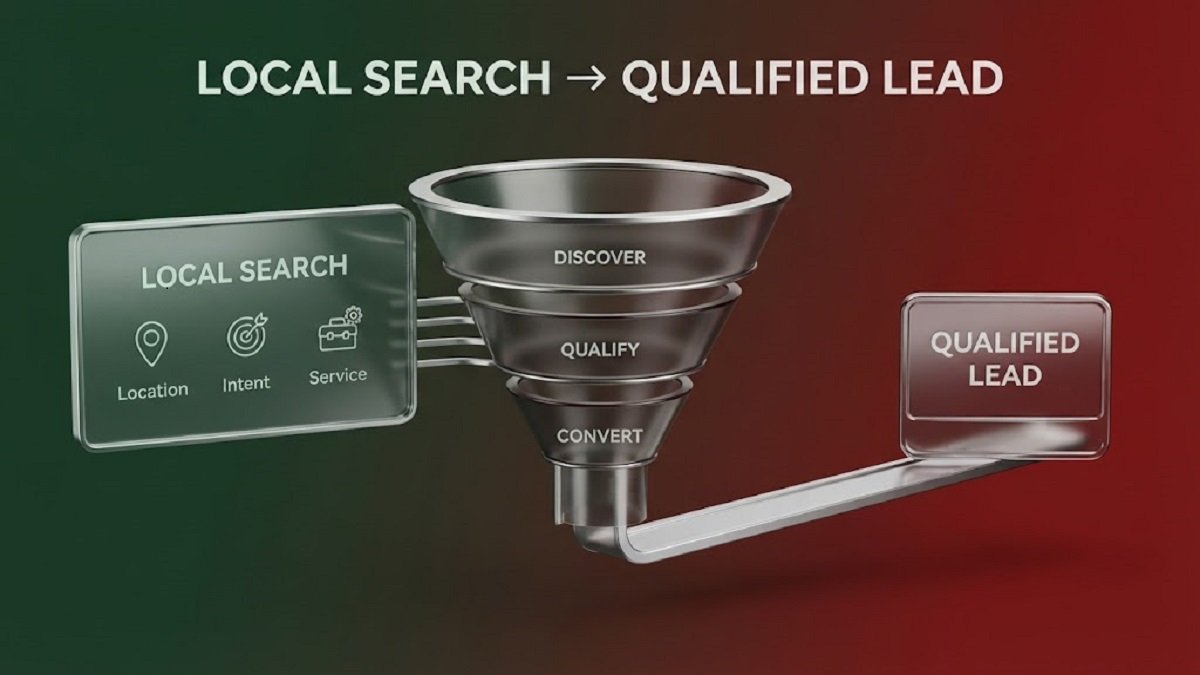
Search → Visit → Engagement → Contact → Qualified Lead → Customer → Revenue
This approach changes how businesses evaluate SEO performance.
Instead of asking only:
“Did we rank?”
They can also ask:
“Did our visibility attract the right customers?”
And:
“Did those customers take meaningful actions?”
Why Rankings Alone Can Be Misleading
Ranking reports can provide useful information, but rankings are only one part of the picture.
Consider two businesses.
Business A ranks highly for a broad local keyword but receives very little engagement.
Business B ranks for several highly relevant service searches and receives consistent calls and inquiries.
A ranking-only report may not show the full difference between them.
A revenue-focused approach looks at what happens after visibility.
That includes whether people:
-
Click through to the website
-
Visit important service pages
-
Request a quote
-
Call the business
-
Book an appointment
-
Become qualified leads
-
Eventually become customers
This creates a more complete view of local SEO performance.
The Customer Journey Is Now Part of Local SEO
Local customers rarely move from a Google search directly to a purchase.
Their journey may include several steps.
For example:
Local Search → Google Business Profile → Website → Service Page → Reviews → Contact → Conversion
Each stage can influence the final decision.
A strong local SEO strategy considers this entire journey.
If a business has strong rankings but a confusing website, poor service information, or weak conversion paths, search visibility may not translate into meaningful results.
That is why modern local SEO services increasingly connect search visibility with the customer experience.
Google Business Profile Has a Bigger Role
Google Business Profile remains an important part of local search visibility.
Customers may use a business profile to:
-
Find contact information
-
Check business hours
-
Read reviews
-
View photos
-
Visit the website
-
Request directions
-
Call the business
These interactions can provide valuable insights into customer behavior.
For local businesses, optimizing the profile is therefore not just about appearing in Maps. It is also about creating a useful first experience for potential customers.
Reviews Are More Than a Trust Signal
Reviews have long been associated with local SEO.
But their value goes beyond visibility.
Potential customers often use reviews to evaluate whether a business is relevant to their needs.
Review patterns can also reveal customer expectations.
For example, repeated comments about:
-
Service quality
-
Response time
-
Pricing
-
Staff experience
-
Product quality
can provide useful business insights.
This means review management can support both local visibility and customer experience improvement.
Local SEO and Conversion Data Are Coming Together
One of the biggest changes in local SEO is the connection between visibility data and conversion data.
A business can now ask more meaningful questions.
For example:
-
Which local searches generate leads?
-
Which services attract the most qualified traffic?
-
Which locations produce the strongest engagement?
-
Which landing pages generate more inquiries?
-
Which Google Business Profile actions lead to contacts?
-
Where do potential customers leave the journey?
These questions help businesses identify opportunities that a basic ranking report may miss.
The Future of Local SEO Services
The future of local SEO is likely to become even more focused on business intelligence.
Artificial intelligence, automation, analytics, and better customer tracking are making it easier to connect search behavior with business outcomes.
This does not mean traditional SEO fundamentals are disappearing.
Relevance, proximity, prominence, technical SEO, quality content, reviews, and accurate business information still matter.
The difference is how these elements are measured and connected.
The focus is moving from:
“How high do we rank?”
to:
“How effectively does local search support business growth?”
What Businesses Should Measure
A modern local SEO measurement framework should include both visibility and business outcomes.
Visibility Metrics
-
Local search visibility
-
Google Maps presence
-
Keyword rankings
-
Organic traffic
-
Google Business Profile performance
Engagement Metrics
-
Website visits
-
Service-page engagement
-
Phone clicks
-
Direction requests
-
Website clicks
-
Review interactions
Conversion Metrics
-
Phone calls
-
Lead submissions
-
Appointment requests
-
Quote requests
-
Qualified leads
-
Customer acquisition
Looking at these metrics together provides a more complete picture of local search performance.
The Strategic Shift
The evolution of local SEO services is not simply about adding more tools or collecting more data.
It is about asking better questions.
A business should not only know whether people can find it.
It should understand why people find it, what they do next, and which parts of the journey contribute to customer acquisition.
That is the foundation of a more intelligent local SEO strategy.
Final Takeaway
Local SEO has evolved from a ranking-focused discipline into a broader customer acquisition strategy.
Rankings still matter. Visibility still matters. Google Business Profile optimization, relevant content, reviews, and technical SEO still matter.
But modern businesses need to connect these activities with real customer actions.
The next stage of local SEO is about understanding the complete journey from search visibility to customer value.
For businesses investing in local SEO services, this shift creates a better opportunity to measure what truly matters: not just where the business appears, but how local search contributes to meaningful business outcomes.