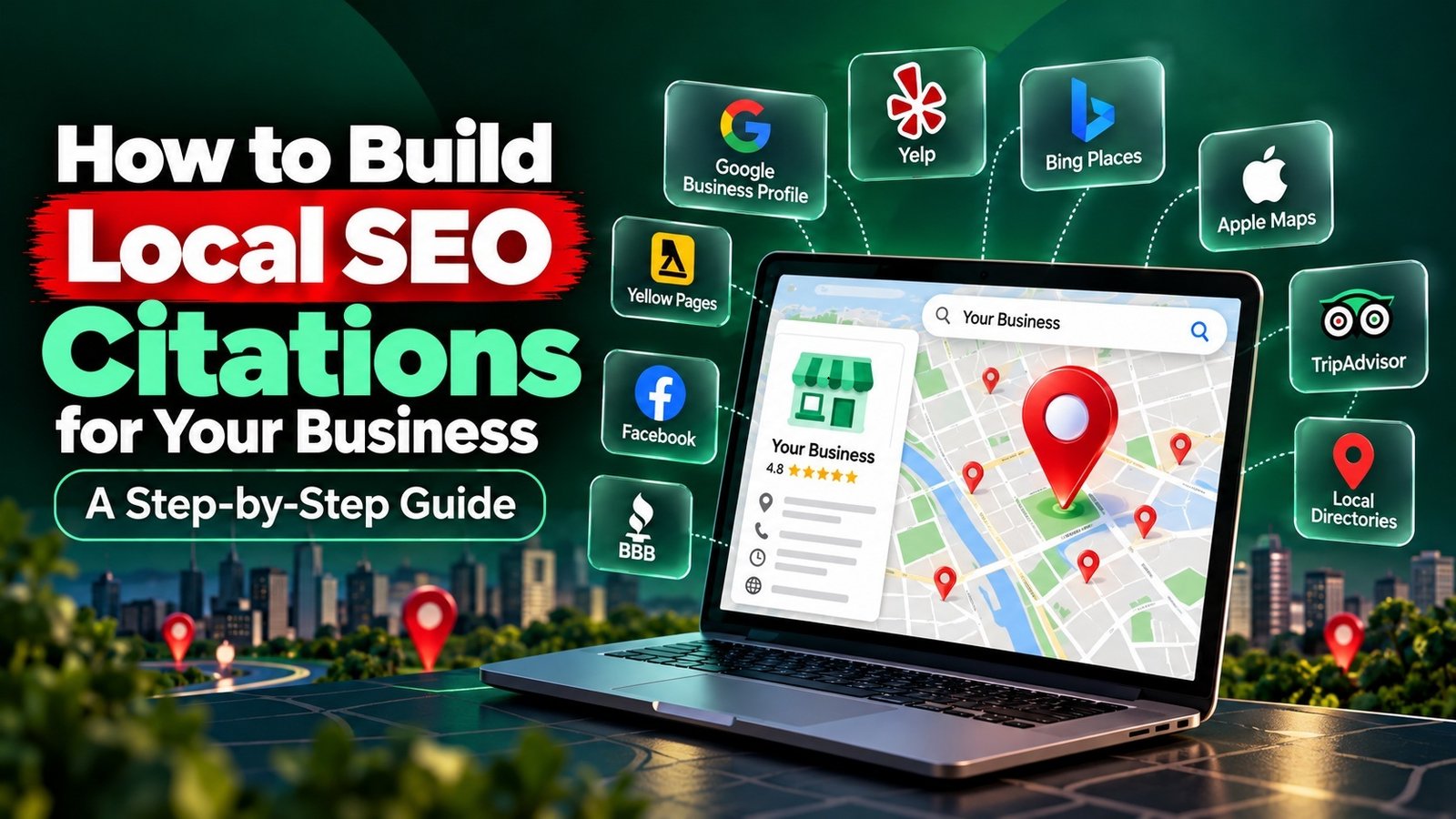
Local SEO Citations: A Complete Guide for U.S. Businesses
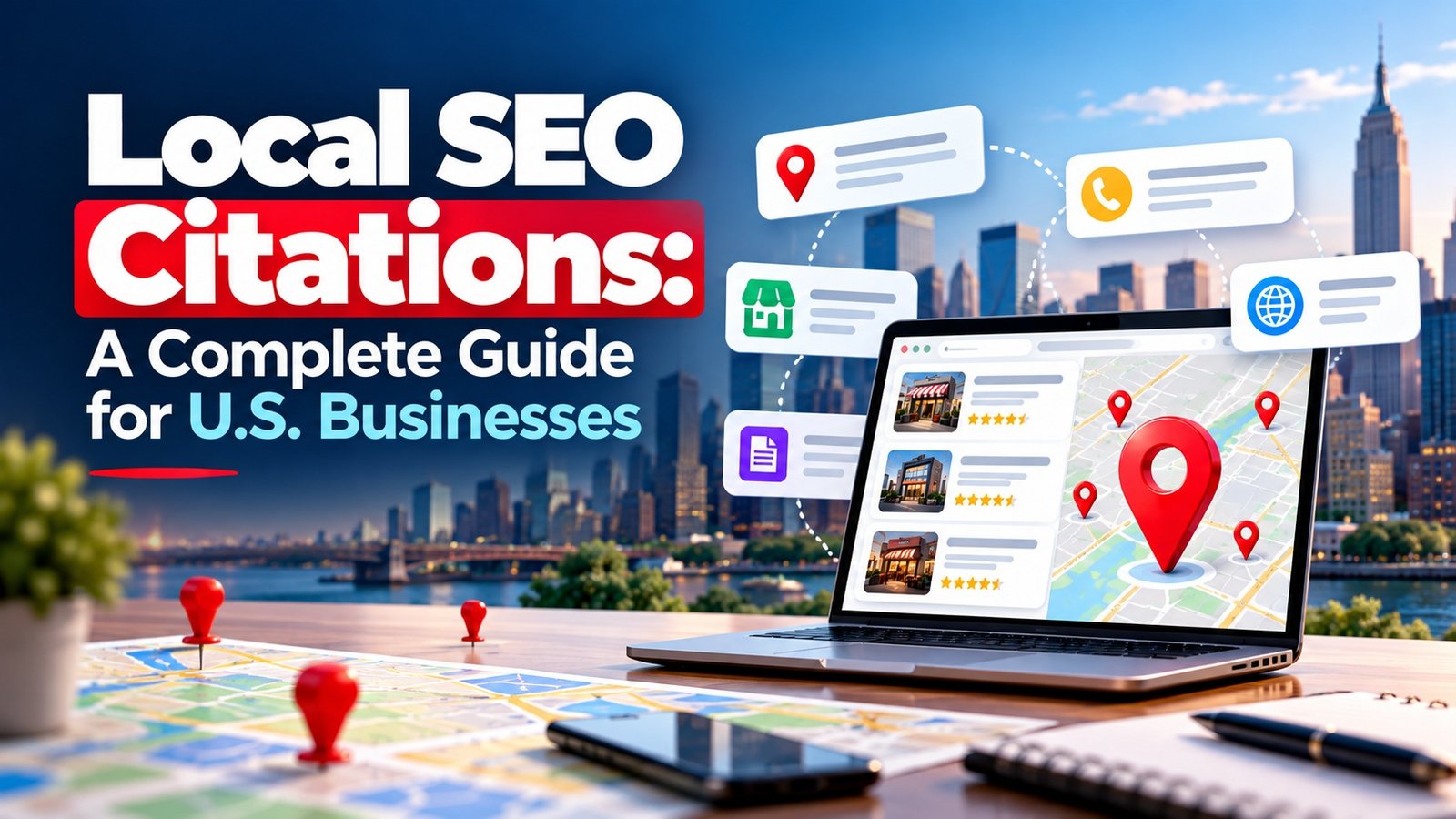
Local SEO citations can play an important role in helping U.S. businesses build a consistent online presence. From business directories and local websites to industry platforms and community listings, these references can help customers and search engines find accurate information about a company.
But citation building isn't about getting listed on every website you can find.
The real goal is to create accurate, relevant, and trustworthy business listings that support your broader Local SEO strategy.
In this guide, you'll learn what local SEO citations are, why they matter, how to build them, what mistakes to avoid, and how to manage your listings over time.
What Are Local SEO Citations?
Local SEO citations are online mentions of a business's information on directories, websites, platforms, and other relevant sources.
A citation may include:
- Business name
- Address
- Phone number
- Website
- Business category
- Business hours
- Services
The three most commonly discussed elements are Name, Address, and Phone number, often called NAP.
For example:
ABC Plumbing
123 Main Street, Austin, TX
(512) 555-1234
abcplumbing.com
If this information appears on a relevant business directory or local website, it can be considered a citation.
However, not every citation has the same value. A relevant and accurate listing is generally more useful than a random listing created simply to increase the number of citations.
Why Do Local SEO Citations Matter?
Search engines use information from multiple sources to understand businesses.
Google says business information can come from sources including publicly available web content, third-party data, user contributions, and information provided by business owners.
That makes consistency important.
Imagine that customers find your business online with three different phone numbers, two addresses, and slightly different business names.
Which information should they trust?
A well-managed citation profile helps create a more consistent representation of your business across the web.
At the same time, citations should not be treated as a guaranteed ranking shortcut. Google says local results are primarily influenced by relevance, distance, and prominence.
That's why citation building works best as part of a broader local search strategy.
1. Focus on Accuracy, Not Quantity
One of the biggest mistakes businesses make is assuming that more listings automatically produce better results.
That's not the right approach.
Creating hundreds of low-quality listings can be less useful than maintaining a smaller group of accurate, relevant sources.
Instead of asking:
"How many listings can we create?"
Ask:
"Which websites are genuinely relevant to this business?"
Prioritize:
- Accuracy
- Relevance
- Trustworthiness
- Location
- Industry
- Customer usefulness
The objective is to build a clean online footprint—not simply a large one.
2. Keep Your NAP Information Consistent
NAP stands for:
Name + Address + Phone Number
Your core business information should remain accurate across important platforms.
For example, one listing might show:
ABC Plumbing LLC
123 Main Street
(512) 555-1234
while another shows:
ABC Plumbing Services
123 Main St.
(512) 555-5678
Small formatting differences aren't necessarily a problem, but incorrect information should be corrected.
Create a master record containing your official business details and use it whenever you create or update a listing.
This makes managing local SEO citations much easier, especially when a business has many locations or has been operating for several years.
3. Start With Your Google Business Profile
Before building new listings, make sure your Google Business Profile is accurate and complete.
Check your:
- Business name
- Primary category
- Address
- Phone number
- Website
- Business hours
- Services
- Photos
- Business description
Google recommends keeping Business Profile information complete and accurate because this helps Google understand what the business does and where it operates.
Your Business Profile should be treated as part of the foundation of your local search presence.
4. Choose Relevant Citation Sources
Not every directory is worth your time.
A good citation source should make sense for your:
Business + Industry + Location + Customers
For example, a restaurant may look for food-related platforms, local directories, hospitality websites, and relevant community sources.
A law firm may focus on legal directories and professional organizations.
A home-services company may find relevant opportunities through local service directories and industry platforms.
Before creating a listing, ask:
Would my potential customers actually find this platform useful?
If the answer is no, it probably shouldn't be a priority.
5. Look for Local Citation Opportunities
Businesses often focus heavily on major national directories and overlook smaller local opportunities.
That can be a missed opportunity.
Depending on the business, useful sources may include:
- Local business directories
- Chamber of commerce websites
- Community organizations
- Regional publications
- Local associations
- City-based business platforms
- Industry organizations
For U.S. businesses, local relevance can be particularly useful when building a broader online presence.
The objective isn't to appear everywhere.
It's to appear in places that are relevant to the business and its customers.
6. Audit Your Existing Listings
Citation building doesn't always mean creating something new.
Sometimes the best place to start is by finding what already exists.
Search for your:
- Business name
- Business name + city
- Phone number
- Address
- Website
- Previous business name
Look for:
- Incorrect addresses
- Old phone numbers
- Outdated websites
- Incorrect categories
- Duplicate profiles
- Closed locations
- Old business names
These problems can remain online for years if nobody checks them.
A regular citation audit can help identify and correct outdated information.
7. Manage Duplicate Listings
More listings don't automatically mean more visibility.
If the same business has multiple profiles on the same platform, those duplicates can create unnecessary confusion.
Before creating a new listing, search the platform first.
If a duplicate already exists, check whether it can be:
- Updated
- Claimed
- Merged
- Removed
- Reported
The exact process depends on the platform.
The important principle is simple:
Clean up existing listings before creating unnecessary new ones.
8. Build Industry-Specific Listings
General business directories aren't your only option.
Industry-specific platforms can also be useful for local SEO citations.
Depending on your business, you might consider:
- Professional organizations
- Trade associations
- Industry directories
- Local business associations
- Specialized platforms
- Professional networks
For example, a contractor may look for construction or home-service directories, while a professional services firm may focus on industry associations.
The more relevant the platform is to the business, the more useful the listing may be for customers.
9. Don't Forget Local Directories
National platforms are only one part of citation building.
Local websites can also provide opportunities to establish your business within a particular community.
Consider relevant:
- City directories
- Regional business websites
- Local chambers
- Community organizations
- Neighborhood platforms
- Local publications
When evaluating local SEO citations, think about where your customers actually spend time online.
A small local directory with a strong connection to your market may be more relevant than a large website that has nothing to do with your industry or location.
10. Keep Your Website Information Consistent
Your website should reinforce the information found across your important listings.
Check that your website contains accurate:
- Business name
- Address
- Phone number
- Hours
- Services
- Service areas
- Contact details
Google says information from a business's official website can be among the sources used to compile business information.
That's another reason to make sure your website and external listings tell the same basic story.
11. Reviews Are Part of the Bigger Picture
Citations and reviews are different, but both can contribute to a business's overall local presence.
Customers often look at reviews before deciding whether to contact or visit a business.
Google recommends responding to customer reviews, and its guidance also emphasizes that reviews should reflect genuine experiences.
A good review strategy should focus on:
- Delivering a strong customer experience.
- Making it easy for customers to provide feedback.
- Encouraging genuine reviews.
- Responding professionally.
- Learning from customer feedback.
Don't buy reviews or manipulate customer feedback.
Trust is more valuable than artificial numbers.
12. Update Your Citations When Your Business Changes
Business information changes over time.
A company may:
- Move to a new address
- Change its phone number
- Update its website
- Change business hours
- Add new services
- Rebrand
- Open another location
When something changes, don't update only your website.
Review your important local SEO citations as well.
Otherwise, customers may continue finding outdated information long after the change has taken place.
13. Manage Citations for Multiple Locations
Multi-location businesses have an additional challenge.
Each location may have its own:
- Address
- Phone number
- Business Profile
- Website page
- Local listings
- Reviews
- Services
Create a central tracking system for each location.
For example:
| Location | Directory | Status | Information Correct? |
|---|---|---|---|
| Austin | Directory A | Active | Yes |
| Dallas | Directory A | Active | Yes |
| Houston | Directory B | Needs Update | No |
A simple spreadsheet can make citation management much easier.
Common Local Citation Mistakes
Here are some problems businesses run into repeatedly.
❌ Creating hundreds of low-quality citations
Quantity shouldn't be the primary objective.
❌ Using different business information everywhere
Inconsistent information creates unnecessary confusion.
❌ Ignoring old listings
Outdated listings can remain online long after a business changes.
❌ Creating duplicate profiles
More listings don't automatically mean more visibility.
❌ Using irrelevant directories
A directory should make sense for your business, location, or industry.
❌ Forgetting about local directories
National platforms aren't the only citation opportunities.
❌ Building citations once and never checking them
Business information changes over time.
❌ Treating citations as the entire SEO strategy
Citations are one component of local SEO—not a replacement for your website, reviews, content, Business Profile, or broader authority-building efforts.
A Simple Citation Building Process
If you're starting from scratch, follow this process.
Step 1: Create your official business information
Prepare one accurate record containing your business name, address, phone number, website, hours, categories, and other important information.
Step 2: Audit existing listings
Search Google and relevant directories to find existing business mentions.
Step 3: Fix inaccurate information
Correct outdated names, addresses, phone numbers, websites, and other details.
Step 4: Find relevant opportunities
Look for reputable local, industry, professional, and general business platforms.
Step 5: Check for duplicates
Identify duplicate profiles before creating additional listings.
Step 6: Build selectively
Create listings only on platforms that are relevant to your business.
Step 7: Monitor your information
Review important listings periodically and update them whenever your business information changes.
How Citations Fit Into a Local SEO Strategy
It's important to remember that citations aren't your entire SEO strategy.
A stronger local search approach can include:
- Google Business Profile optimization
- Website SEO
- Local keyword research
- Local content
- Online reviews
- Citation management
- Local links
- Reputation management
- Performance tracking
Google states that local results are primarily based on relevance, distance, and prominence. Prominence can also be influenced by information across the web, including links and reviews.
That means businesses should look at their local presence as a complete ecosystem rather than relying on a single tactic.
Local SEO Citation Checklist
Before considering your citation work complete, check:
☐ Business name is accurate
☐ Address is correct
☐ Phone number is correct
☐ Website URL is correct
☐ Business category is relevant
☐ Important directories are claimed
☐ Duplicate listings have been identified
☐ Outdated listings have been reviewed
☐ Relevant local directories have been considered
☐ Industry-specific platforms have been checked
☐ Website information matches important listings
☐ There is a process for future updates
Final Thoughts
Local SEO citations aren't about getting your business listed on every directory available.
The better approach is to build a clean, accurate, relevant, and maintainable online presence.
Start with your official business information. Audit existing listings. Fix inconsistencies. Manage duplicate profiles. Prioritize relevant directories and keep important information updated.
Most importantly, remember that citations are only one part of Local SEO.
Your Google Business Profile, website, reviews, content, local authority, and overall customer experience also matter.
For U.S. businesses competing in local search, a well-managed citation strategy can provide a stronger foundation for local visibility.
If you're looking to improve your broader local search strategy, Holinex's Local SEO solutions can help you build a strategy around your business, target market, and growth goals.
All Reference Source: Google