How a Google Map SEO Strategy Can Improve Your Business Visibility
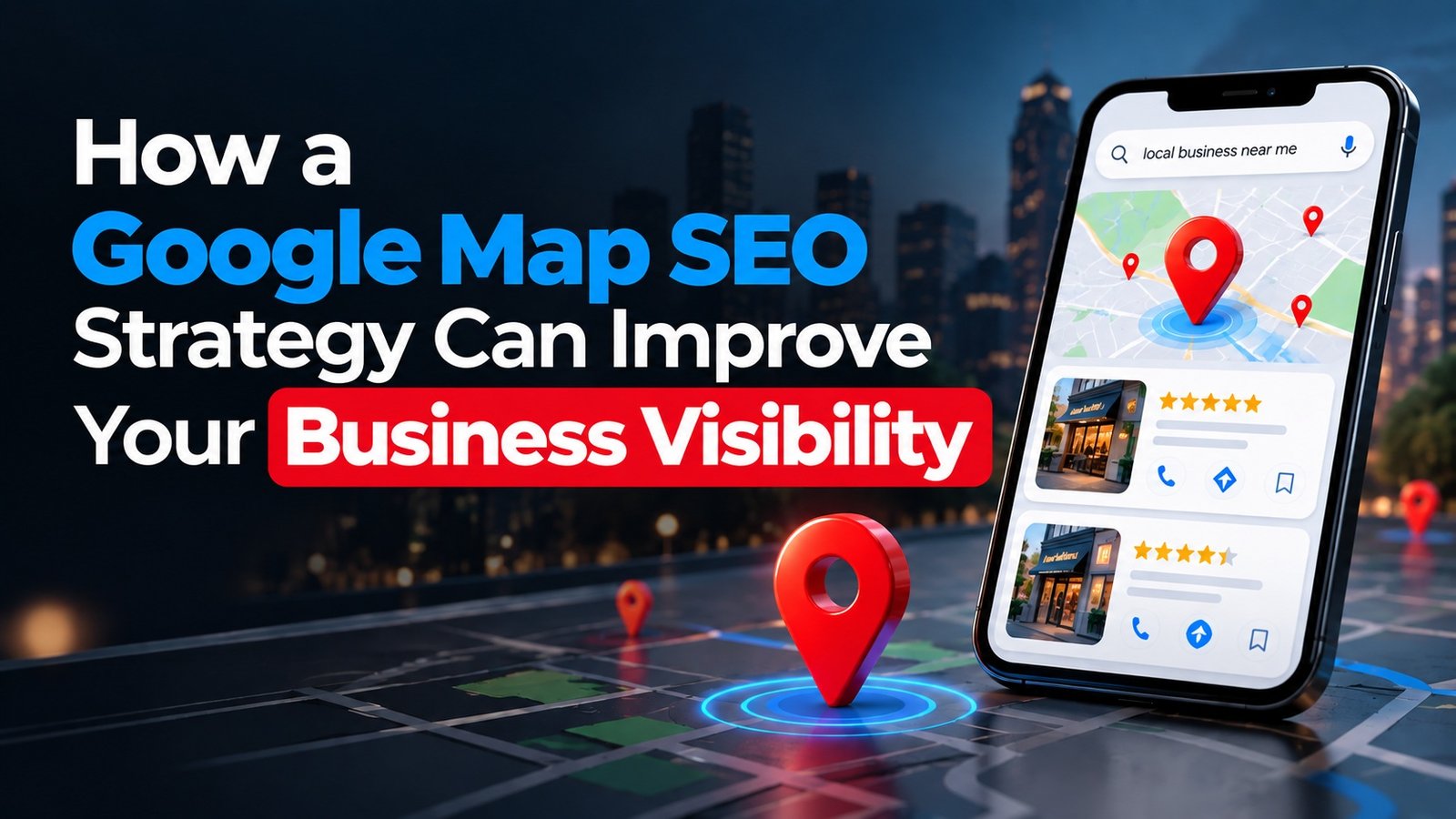
Google Map SEO can help local businesses become more visible when potential customers search for nearby products and services. But improving your presence on Google Maps isn't about adding keywords everywhere or trying to manipulate rankings. It requires a well-rounded local SEO strategy that helps Google understand your business, its location, services, reputation, and relevance to local searches.
For businesses that depend on customers in specific cities, neighborhoods, or service areas, strong local visibility can make a meaningful difference. A customer searching for “dentist near me,” “best coffee shop in Austin,” or “plumber in Dallas” is often ready to take action. Appearing prominently in those searches can put your business in front of customers at an important moment.
So, how can a Google Map SEO improve your business visibility?
Let's look at the key areas that matter.
What Is Google Map Visibility?
Google Maps SEO refers to how prominently your business appears in local results on Google Maps and Google Search.
When someone searches for a local business or service, Google evaluates different businesses and determines which ones are most relevant to that particular search.
Google says local results are primarily influenced by relevance, distance, and prominence.
This means there isn't one single optimization that guarantees a top position.
Instead, businesses need to build a strong local search presence across several areas.
1. Start With a Complete Google Business Profile
Your Google Business Profile is one of the most important foundations of your local search presence.
A complete and accurate profile gives Google useful information about your business and helps potential customers understand what you offer.
Make sure your profile includes accurate:
- Business name
- Address
- Phone number
- Website
- Business hours
- Primary category
- Services
- Business description
- Photos
- Service area, when applicable
Google specifically recommends keeping business information complete and accurate because this can help businesses appear in relevant local searches.
Think of your Business Profile as your local search storefront.
If customers can't easily understand what you do, where you operate, or when you're available, your profile isn't doing its job.
2. Choose the Right Primary Category
Your primary Business Profile category helps Google understand what your business is.
For example, a business might be:
- A dental clinic
- A law firm
- A restaurant
- A plumbing company
- A real estate agency
- A digital marketing agency
Choose the category that most accurately represents your core business.
Don't choose categories simply because they contain keywords you want to rank for.
Google recommends using as few categories as necessary and choosing categories that are specific and representative of the business.
Why does this matter?
Because local search starts with relevance.
If your profile clearly communicates what your business actually is, Google has a better foundation for matching it with relevant searches.
3. Make Your Business Information Consistent
Your business information should be consistent across your online presence.
Check your:
- Google Business Profile
- Website
- Local directories
- Industry directories
- Social media profiles
- Business listings
- Relevant third-party websites
Pay particular attention to your:
Name → Address → Phone number → Website
If information is outdated or inconsistent, customers may become confused and search engines may have a harder time connecting information about your business.
Google also uses information from multiple sources when compiling local business information, including public websites, third parties, user contributions, and business owners.
Consistency helps create a clearer digital footprint.
4. Build a Website That Supports Local Search
Your Business Profile shouldn't be your only local search asset.
Your website should reinforce the same information.
A strong local business website should make it clear:
- What services you provide
- Which locations you serve
- Who your customers are
- How customers can contact you
- Where your business is located
- Why customers should choose you
For example, instead of having a generic page titled:
Our Services
you might create detailed service pages that explain exactly what you offer and where those services are available.
However, avoid creating dozens of low-quality location pages simply to target different city names.
Local content should provide genuine value.
5. Create Useful Location-Based Content
Content is another important part of a broader local SEO strategy.
Instead of repeatedly inserting city names into generic articles, create content that actually helps people in your target market.
For example, a local HVAC company could publish:
- How to Prepare Your HVAC System for Summer
- Common AC Problems in Older Homes
- When Should You Replace Your Air Conditioner?
- How Much Does HVAC Maintenance Cost?
- Signs Your Heating System Needs Professional Service
You can naturally connect these topics to the communities you serve when the information is genuinely relevant.
The goal isn't to write for search engines alone.
Write content that local customers would actually want to read.
6. Build a Genuine Review Strategy
Reviews can influence both customer trust and local visibility.
Google states that reviews and positive ratings can help a business's local ranking, while also emphasizing that reviews must reflect genuine customer experiences.
A sustainable review strategy can include:
- Asking satisfied customers for honest feedback
- Making the review process simple
- Providing a direct review link or QR code
- Responding to customer feedback
- Monitoring new reviews consistently
Don't try to manufacture a perfect reputation.
Real customer experiences are much more valuable than artificially generated ratings.
Google prohibits paid or incentivized reviews and other forms of fake engagement.
7. Respond to Customer Reviews
Getting reviews is only part of reputation management.
Responding to reviews shows customers that your business pays attention to feedback.
For positive reviews, a simple and personal response can strengthen the customer relationship.
For negative reviews, remain professional.
Avoid arguing with customers publicly or turning every response into a sales pitch.
Instead:
- Acknowledge the concern
- Be respectful
- Provide useful information
- Offer an appropriate way to continue the conversation when necessary
Google recommends responding to reviews as part of managing your Business Profile.
8. Add High-Quality Photos and Videos
Visual content can make your Business Profile more useful to potential customers.
Depending on your business, consider adding:
- Exterior photos
- Interior photos
- Products
- Completed projects
- Team photos
- Service images
- Facilities
- Work environment
- Short videos
Your images should accurately represent your business.
Don't rely entirely on stock photography.
Customers want to know what your real business looks like before they visit, contact you, or make a purchase.
Google also recommends adding photos and videos to help customers understand what a business offers.
9. Strengthen Your Local Authority
Local authority is another area where your website and broader SEO strategy can support your Maps presence.
Look for legitimate opportunities to earn mentions from relevant websites.
These could include:
- Local news websites
- Industry publications
- Chambers of commerce
- Local organizations
- Community websites
- Business associations
- Relevant directories
- Local partnerships
Don't approach local link building as a numbers game.
One relevant, trustworthy mention can be more valuable than dozens of unrelated links.
Google notes that prominence can be influenced by information across the web, including links and reviews.
10. Optimize for Local Search Intent
Not every search has the same intent.
Compare:
“best running shoes”
with:
“running shoe store near me”
The second search has much stronger local intent.
Your local SEO strategy should consider the types of searches your customers actually make.
Think about:
- Services
- Products
- Locations
- “Near me” searches
- Emergency searches
- Opening hours
- Local questions
- Commercial searches
Then make sure your website and Business Profile provide useful information for those search intents.
11. Don't Ignore Technical SEO
Local SEO still depends on a healthy website.
Make sure your website is:
- Mobile-friendly
- Fast enough for users
- Easy to navigate
- Secure with HTTPS
- Crawlable by search engines
- Properly internally linked
- Free from major indexing problems
Also make sure important local information isn't hidden or difficult to find.
A strong Business Profile can't compensate for a website that provides a poor user experience.
12. Track More Than Your Maps Position
One of the biggest mistakes businesses make is checking their Google Maps position once and assuming that's their complete performance picture.
Local results can vary depending on factors such as the searcher's location and the specific search.
Google explains that distance is one of the main factors used in local ranking, so different users can see different local results
Instead of tracking only rankings, monitor:
- Business Profile views
- Website visits
- Phone calls
- Direction requests
- Website clicks
- Search visibility
- Review growth
- Leads
- Sales or conversions
Ultimately, the goal isn't simply to rank higher.
The goal is to generate more qualified local business.
Common Local SEO Mistakes to Avoid
A good strategy isn't only about what you should do.
It's also about knowing what to avoid.
Keyword-stuffing your business name
Your Business Profile name should reflect your real-world business name. Adding extra keywords can violate Google's guidelines.
Creating fake locations
Don't create Business Profiles for locations where your business doesn't genuinely operate.
Buying reviews
Fake or incentivized reviews can violate Google's policies and damage customer trust.
Creating low-quality location pages
Publishing dozens of nearly identical city pages can create a poor user experience rather than meaningful local relevance.
Expecting immediate results
Local SEO is a long-term process. Improvements in visibility can take time, particularly in competitive markets.
A Simple Local SEO Checklist for Better Google Map Visibility
Before moving on to more advanced tactics, check these fundamentals:
Google Business Profile
- Profile claimed and verified
- Business name is accurate
- Correct primary category selected
- Address or service area is accurate
- Business hours are current
- Services are complete
- Description is useful
- Photos are current
Website
- Mobile-friendly
- Fast and easy to use
- Services clearly explained
- Locations/service areas clearly stated
- Contact information is consistent
- Local content provides genuine value
Reputation
- Customers are encouraged to leave honest reviews
- Reviews are monitored
- Reviews receive appropriate responses
- No fake or incentivized reviews
Local Authority
- Business information is consistent
- Relevant local citations are accurate
- Legitimate local mentions are being earned
- Industry and community relationships are developed
Measurement
- Business Profile performance is monitored
- Website traffic is tracked
- Calls and leads are measured
- Conversions are monitored
How the Pieces Work Together
The most effective Google Map SEO strategy doesn't treat your website, reviews, content, and local authority as separate projects.
They support one another.
Your Business Profile communicates what your business is.
Your website provides deeper information.
Your reviews build credibility.
Your local content strengthens topical and geographic relevance.
Your local mentions and links can contribute to prominence.
Your analytics tell you what's actually generating results.
Together, these elements create a stronger local search ecosystem.
A well-planned local SEO strategy takes time, but it can create a stronger foundation for long-term local visibility and customer acquisition.
If you're looking for a broader approach to local search, explore Holinex's Local SEO solutions to build a strategy around your business, target market, and growth goals.