How Business Online Reputation Management Is Changing as Search Becomes More Answer-Driven
For years, Business Online Reputation Management was mostly about monitoring reviews, responding to unhappy customers, protecting brand sentiment, and encouraging positive feedback.
That model still matters. But search is changing the environment around it.
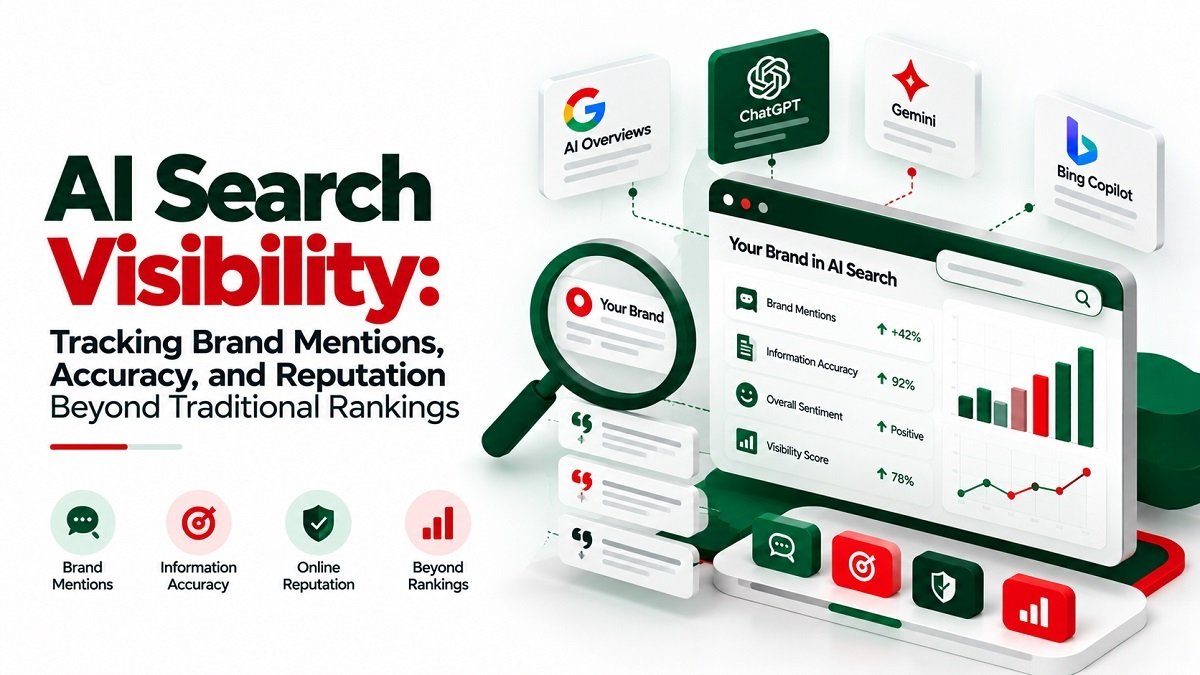
People are no longer relying only on a traditional list of blue links to decide which business deserves their attention. Search experiences are becoming more answer-driven. AI-powered search systems can summarize information, compare businesses, interpret reviews, identify patterns, and help users decide what may be worth considering.
That creates a bigger challenge for businesses.
Your reputation is no longer only what a customer sees after clicking your website or opening your Google Business Profile. Increasingly, it can influence the information that search systems collect, interpret, summarize, and use when helping someone make a decision.
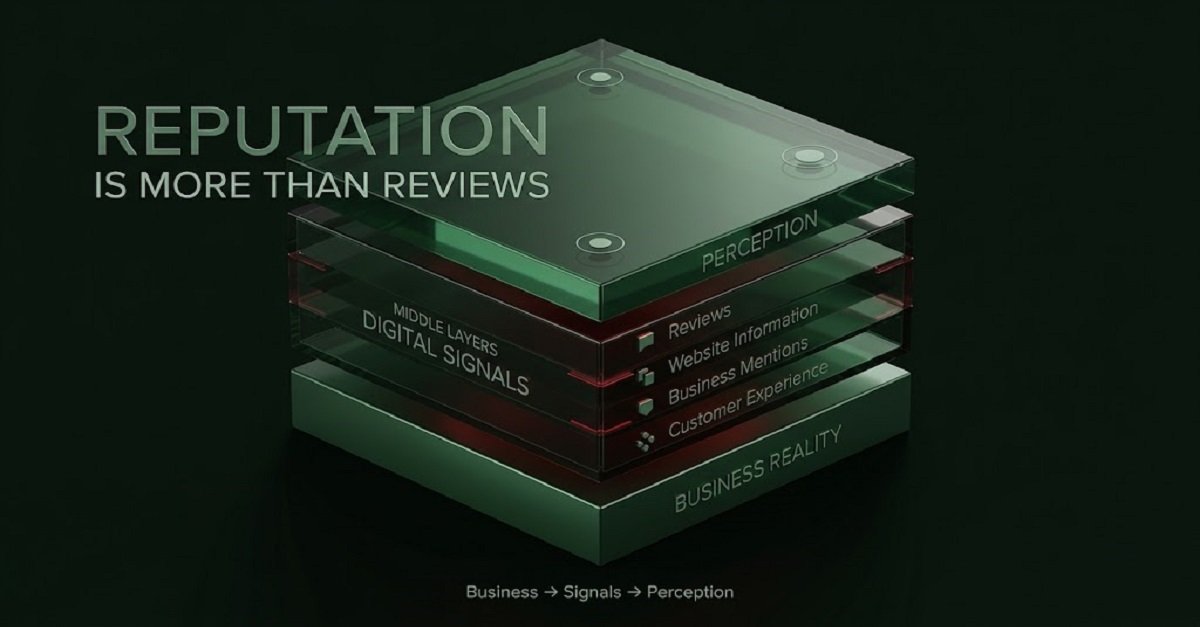
This is why Business Online Reputation Management is moving beyond simple review monitoring. It is becoming a broader process of managing the information, experiences, signals, and perceptions that shape how a business is understood online.
Search Is Becoming More Answer-Driven
Traditional search often required users to do the work.
Someone might search for:
“Best roofing company near me.”
They would receive a collection of websites, business listings, review profiles, directories, and other results. The user would compare them and form an opinion.
Answer-driven search changes part of that journey.
Instead of simply asking users to find and compare information themselves, modern search experiences can help interpret the available information and present a more direct answer.
This does not mean traditional search has disappeared. It means the decision-making layer is becoming more important.
For Business Online Reputation Management, that difference is significant.
A business now needs to think about more than whether its website ranks or whether its review score looks good.
It needs to consider the broader question:
What does the digital ecosystem say about this business when different sources are combined?
That includes reviews, business information, website content, customer comments, public descriptions, third-party references, photos, services, location information, and other signals that may contribute to the way a business is understood.
Reputation Is Becoming an Information Problem
Reputation has always been connected to information.
Customers cannot judge a business directly before they interact with it. They use available information as a shortcut.
Reviews help.
Business descriptions help.
Photos help.
A professional website helps.
Accurate contact information helps.
Recommendations from other people help.
But answer-driven search adds another layer.
Search systems can bring together information from different places and attempt to understand the business as a whole.
That means Business Online Reputation Management increasingly involves information consistency.
Imagine a local contractor whose website says it specializes in commercial paving, while several directories describe it only as a general construction company. Its business profile lists one service area, while other public sources mention several different locations.
None of those details may look disastrous individually.
Together, however, they can create an unclear digital identity.
The problem is not necessarily a bad review.
The problem is uncertainty.
And uncertainty can affect perception.
From Review Management to Reputation Management
Reviews remain one of the most visible parts of online reputation.
But reputation is bigger than a review score.
A company could have hundreds of positive reviews and still create doubts because its website is outdated, business information is inconsistent, service descriptions are unclear, or customers repeatedly mention the same weakness.
This is where modern Online Reputation Management Strategy becomes more strategic.
Instead of asking only:
“How many positive reviews do we have?”
Businesses should also ask:
“What patterns appear across our online presence?”
For example, customers might repeatedly praise a company for responsiveness.
That is a reputation asset.
Another business might receive frequent comments about clear communication and accurate estimates.
That is also valuable.
At the same time, repeated complaints about missed appointments, unclear pricing, slow communication, or poor follow-up can become meaningful reputation signals.
The important point is that individual comments may not tell the whole story.
Patterns do.
AI-Powered Search Can Change How Reputation Is Interpreted
One of the biggest changes is that AI-powered systems can work with information in a more interpretive way.
Instead of simply matching a keyword with a webpage, an answer-driven system may attempt to understand what the user is actually asking and which information is relevant to the decision.
For a local business, that can create questions such as:
-
Is this company considered reliable?
-
Does it serve my area?
-
What services does it actually provide?
-
Do customers mention quality?
-
Is it known for fast communication?
-
Does it appear suitable for commercial projects?
-
What are customers saying about its work?
-
Are there recurring complaints?
-
How does it compare with similar businesses?
These are reputation questions.
They are also business-selection questions.
That is why Business Online Reputation Management is becoming increasingly connected to search visibility.
The goal is not to manipulate an AI system into saying something positive.
The goal is to make sure the real business is represented accurately, consistently, and credibly across the digital ecosystem.
Business Perception Can Become a Search Asset
Businesses often think about reputation as something separate from search marketing.
In practice, the two are closely connected.
Consider a local service company with a strong reputation.
Customers consistently describe the company as professional.
Its website clearly explains its services.
Its business profile contains accurate information.
Its reviews contain detailed experiences rather than only one-line ratings.
Its service areas are understandable.
Its public information is relatively consistent.
That business has created something more valuable than a collection of individual SEO signals.
It has created a coherent digital identity.
This is one of the most important directions for Business Online Reputation Management.
The objective is not simply to create more positive content.
It is to create enough trustworthy information that customers—and increasingly search systems—can understand what the business actually represents.
Reviews Are Becoming More Contextual
A five-star rating is useful.
But a five-star rating with no explanation tells a potential customer much less than a detailed review.
Compare these two examples:
“Great company. Highly recommend.”
And:
“The team arrived when promised, explained the drainage problem clearly, completed the driveway repair in two days, and cleaned the site before leaving.”
The second review contains context.
It tells a customer what happened.
It describes service quality.
It identifies a specific experience.
It provides useful information for someone evaluating the company.
As search becomes more answer-driven, context can become increasingly important.
This does not mean businesses should attempt to manufacture specific wording in reviews.
They should not.
Instead, businesses should create good customer experiences and make it easy for customers to provide honest feedback.
That is a much healthier foundation for Business Online Reputation Management.
Reputation Signals Can Exist Beyond Your Website
Another important change is that businesses do not completely control their online reputation.
A company controls its website.
It may control its business profile.
It can respond to reviews.
But customers, publishers, directories, communities, and other public sources can contribute information too.
Google itself explains that local business information can come from multiple sources, including publicly available web content, third-party data, users, and business owners. Google also uses information from different sources when displaying local listings and summaries.
This makes reputation management more complicated.
A business cannot simply publish one perfect “About Us” page and assume that the digital ecosystem will understand it exactly as intended.
Business Online Reputation Management therefore needs monitoring across multiple information sources.
The question becomes:
“What information exists about us?”
rather than only:
“What have we published?”
The Business Website Still Matters
It would be a mistake to assume that answer-driven search makes business websites irrelevant.
The opposite may be true.
A strong website gives search systems and customers useful first-party information about a business.
It can explain:
-
What the company does
-
Where it operates
-
Which services it provides
-
Who it serves
-
What makes its approach different
-
How customers can contact it
-
What questions customers commonly ask
A website also gives the business a place to clarify information that may be incomplete elsewhere.
For Business Online Reputation Management, this makes the website part of the reputation foundation.
The goal is not to fill every page with promotional claims.
It is to provide clear, useful, accurate information that supports the business identity customers are seeing elsewhere.
Local Search and Reputation Are Moving Closer Together
For local businesses, reputation and local search are becoming harder to separate.
A person searching for a service provider is not simply looking for a company name.
They are looking for confidence.
They want to know whether the business serves their location, provides the right service, has credible customer experiences, and appears dependable.
Google's local search guidance emphasizes accurate business information, complete profiles, and relevance to local searches.
That means Business Online Reputation Management should not operate in isolation from local seo strategy.
A strong reputation can support the broader perception of a business.
Accurate business information can reduce confusion.
Consistent service descriptions can make the company easier to understand.
Relevant customer feedback can provide context.
Together, these elements create a stronger digital presence.
What Businesses Should Monitor Now
The old reputation checklist was relatively simple:
Monitor reviews.
Respond to complaints.
Ask for positive feedback.
Today, businesses need a broader checklist.
They should monitor:
1. Review Patterns
Look beyond the average rating.
What do customers repeatedly praise?
What problems appear more than once?
Are complaints increasing or decreasing?
2. Business Information
Check whether business name, address, phone number, service areas, categories, hours, and descriptions remain accurate.
3. Service Identity
Make sure different online sources describe the company's services consistently.
4. Customer Language
Pay attention to how real customers describe the business.
Customers may use language that the business itself never considered.
Those phrases can reveal how the market actually perceives the company.
5. Third-Party Information
Directories, industry websites, social platforms, review sites, and other public sources can influence the broader digital identity.
6. Search Results
Search the business name, services, location, and common customer questions.
Look at what appears—not only on the first result, but across the broader search environment.
This is becoming an important part of modern Business Online Reputation Management.
The New Reputation Management Question
The biggest shift may be the question businesses ask.
The old question was:
“Do people like our business?”
The newer question is:
“Can customers and search systems clearly understand why our business deserves to be considered?”
That is a much deeper question.
A company may have excellent service but weak digital communication.
Another may have strong marketing but inconsistent customer experiences.
Another may have good reviews but outdated business information.
The strongest reputation strategy brings these pieces together.
It creates alignment between what the business says, what customers experience, what customers say publicly, and what the wider digital ecosystem shows.
Business Online Reputation Management Is Becoming a Long-Term Strategy
Reputation cannot be fixed permanently with one campaign.
It changes as customers change.
Services change.
Locations change.
Employees change.
Competitors change.
Customer expectations change.
Search technology also changes.
That means Business Online Reputation Management needs ongoing attention rather than occasional damage control.
A business should periodically review its digital identity and ask:
Is our information accurate?
Does our website reflect what we actually offer?
Are customers describing us consistently?
Are recurring complaints being addressed at the operational level?
Does our business profile match our website?
Are there outdated descriptions elsewhere?
Does our online presence communicate the qualities we want customers to associate with our company?
These questions are more useful than simply chasing a higher review score.
The Future of Business Reputation Is About Being Understandable
Search is becoming better at answering questions.
Customers are becoming more comfortable asking search systems to compare options, summarize information, and help them decide.
That means businesses need to become easier to understand.
Not louder.
Not more promotional.
Not dependent on exaggerated claims.
Simply clearer and more credible.
This is where Business Online Reputation Management is heading.
The future of reputation management will involve more than watching stars and responding to reviews. It will involve understanding how a business is represented across search results, business profiles, websites, customer feedback, third-party sources, and AI-powered discovery experiences.
For business owners, the opportunity is significant.
A strong reputation is no longer just something that protects a brand after someone searches for it.
It can become part of the information that helps someone discover, evaluate, and trust that business in the first place.
As search becomes more answer-driven, the businesses that stand out may not simply be those with the most marketing.
They may be the businesses with the clearest, most consistent, and most credible digital identity.
That is the new direction of Business Online Reputation Management.