What Are Location Factors in Local SEO? A Complete Beginner’s Guide
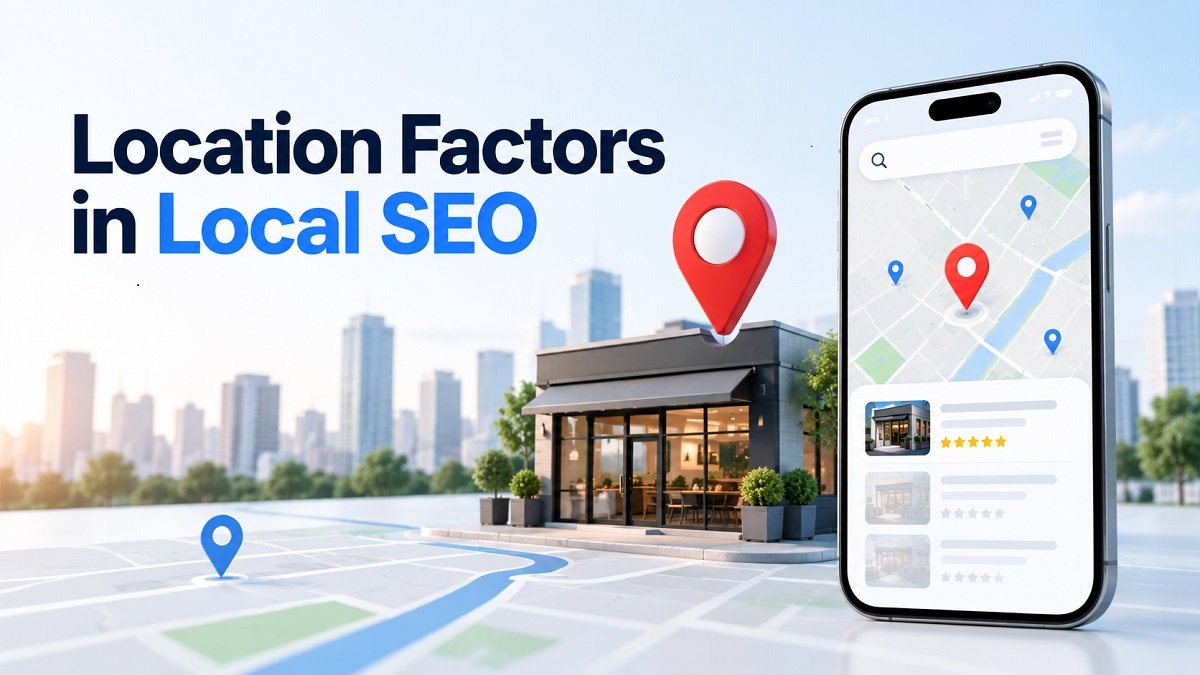
Location factors in local SEO help search engines understand where a business is located and how relevant it is to a local search. Google uses several signals to decide which local businesses should appear for a search. Distance, relevance, and prominence all play an important role in local search visibility.
But what are location factors in Local SEO? How does Google know which business to show to a searcher? And why do some businesses appear higher on Google Maps than others?
In this beginner’s guide, we will explain location factors in simple terms. You will also learn how distance, business information, reviews, and local relevance can affect your local search visibility.
What Are Location Factors in Local SEO?
Location factors in Local SEO are signals that help search engines understand where a business is located and how relevant it is to a local search.
Google uses several signals to decide which local businesses should appear for a search. Its local ranking system is mainly based on relevance, distance, and prominence.
For example, imagine someone searches for:
“Coffee shop near me.”
Google looks at businesses that match the search. It also considers how close those businesses are to the searcher and how well-known or trusted they are.
This helps Google show useful local results instead of random businesses from another city.
Why Location Matters in Local SEO
Location is important because local searches are usually connected to a specific place.
People often search for businesses such as:
-
Restaurants near me
-
SEO agency near me
-
Best dentist in New York
-
Coffee shop near me
-
Digital marketing agency in Chicago
In these searches, the searcher wants a business that is easy to reach or serves the area.
Google uses the searcher’s location or the location included in the search to understand which businesses may be relevant.
This means a business that is closer to the searcher may have an advantage. However, distance is not the only factor.
The Three Main Local Ranking Factors
Google says local results are mainly based on three factors:
1. Relevance
Relevance means how well a business matches what someone searches for.
For example, if someone searches for “Italian restaurant near me,” an Italian restaurant is more relevant than a coffee shop.
Your Google Business Profile should clearly explain what your business offers. Your business category, services, and other profile information can help Google understand your business.
2. Distance
Distance refers to how far your business is from the searcher or the location used in the search.
For example, if two restaurants offer similar services, the restaurant closer to the searcher may have an advantage in local results.
However, Google does not rank businesses based on distance alone. A business that is farther away can still appear higher if it is a better match for the search.
3. Prominence
Prominence refers to how well-known and trusted a business is.
Google can use information from reviews, links, directories, articles, and other sources across the web to understand a business’s prominence.
Positive reviews and strong online visibility can support local search performance.
How Your Business Address Affects Local SEO
Your business address helps Google understand where your business operates.
Make sure your address is accurate and consistent across your:
-
Google Business Profile
-
Website
-
Local directories
-
Business listings
-
Social profiles
Incorrect or inconsistent business information can make it harder for search engines and customers to understand your business.
For businesses with a physical location, accurate location information is an important part of a strong local SEO foundation.
Google Business Profile and Location
Google Business Profile plays an important role in local search visibility.
A complete profile can give Google more information about your business. This includes your business category, address, services, hours, photos, and other details.
Keeping this information accurate can help Google better understand your business and match it with relevant local searches.
For example, if you run a dental clinic, make sure your profile clearly identifies your business as a dental clinic. Add accurate services and keep your business information up to date.
Reviews Can Support Local Visibility
Customer reviews are another important part of local SEO.
Reviews can help show that your business is active and trusted by customers. Google states that review count and positive ratings can improve a business’s local ranking.
Ask real customers to leave honest reviews after using your products or services.
You should also respond to reviews when appropriate. A helpful response can show customers that you care about their experience.
Local Content and Location Relevance
Your website should also make it clear where you serve customers.
For example, a local marketing agency could create pages about:
-
Digital marketing services in Chicago
-
SEO services in Chicago
-
Local SEO for Chicago businesses
But avoid adding city names simply to manipulate rankings.
Your content should provide useful information for people in that location. Quality and relevance matter more than repeating a location keyword again and again.
How to Improve Location Factors in Local SEO
Understanding location factors in local seo can help small businesses improve their local search visibility. These factors help google understand where a business is located , what it offers, and which local customers may find it useful.
You can take several simple steps to improve your local SEO foundation.
Keep Your Business Information Accurate
Check your business name, address, phone number, website, and hours.
Update them when something changes.
Optimize Your Google Business Profile
Choose the most accurate business category. Add relevant services and complete important profile information.
Build Local Reviews
Encourage real customers to leave honest reviews. Respond to feedback in a professional way.
Create Useful Local Content
Write content that answers questions from people in your target area.
Build Local Links
Relevant links from local organizations, publications, and websites can help strengthen your online presence.
Keep Your Website Consistent
Make sure your website and Google Business Profile provide consistent business information.
Can a Business Rank Outside Its Immediate Area?
Yes, but distance can still matter.
A business does not automatically rank everywhere in a city just because it has added that city to its website or service area.
Google considers the location connected to the search and other ranking factors when showing local results.
This is why businesses should focus on relevance and prominence instead of trying to manipulate their location information.
Common Location SEO Mistakes
Many businesses make simple mistakes that can hurt their local SEO efforts.
Some common mistakes include:
-
Using incorrect business information
-
Choosing the wrong Google Business Profile category
-
Creating thin location pages
-
Adding too many location keywords
-
Ignoring customer reviews
-
Using fake business addresses
-
Leaving outdated business hours online
-
Creating low-quality local content
Avoid these practices and focus on providing accurate information and a good customer experience.
Location Factors vs. Traditional SEO
Traditional SEO focuses heavily on helping a website rank for relevant searches.
Local SEO has an additional layer: location.
For example, someone searching for:
“best running shoes”
may want general information.
But someone searching for:
“best running shoes near me”
is showing local intent.
The second search gives Google a strong reason to consider location when choosing results.
That is why local businesses need both good website SEO and strong local signals.
Location is an important part of Local SEO, but it is not the only factor that matters.
Google mainly considers relevance, distance, and prominence when ranking local results.
Businesses can improve their local SEO by keeping their information accurate, optimizing their Google Business Profile, earning genuine reviews, creating useful local content, and building a strong online presence.
The goal is simple: help Google understand your business and help local customers find you.