Google Local Services Ranking: Auction, Relevance, and Trust Signals
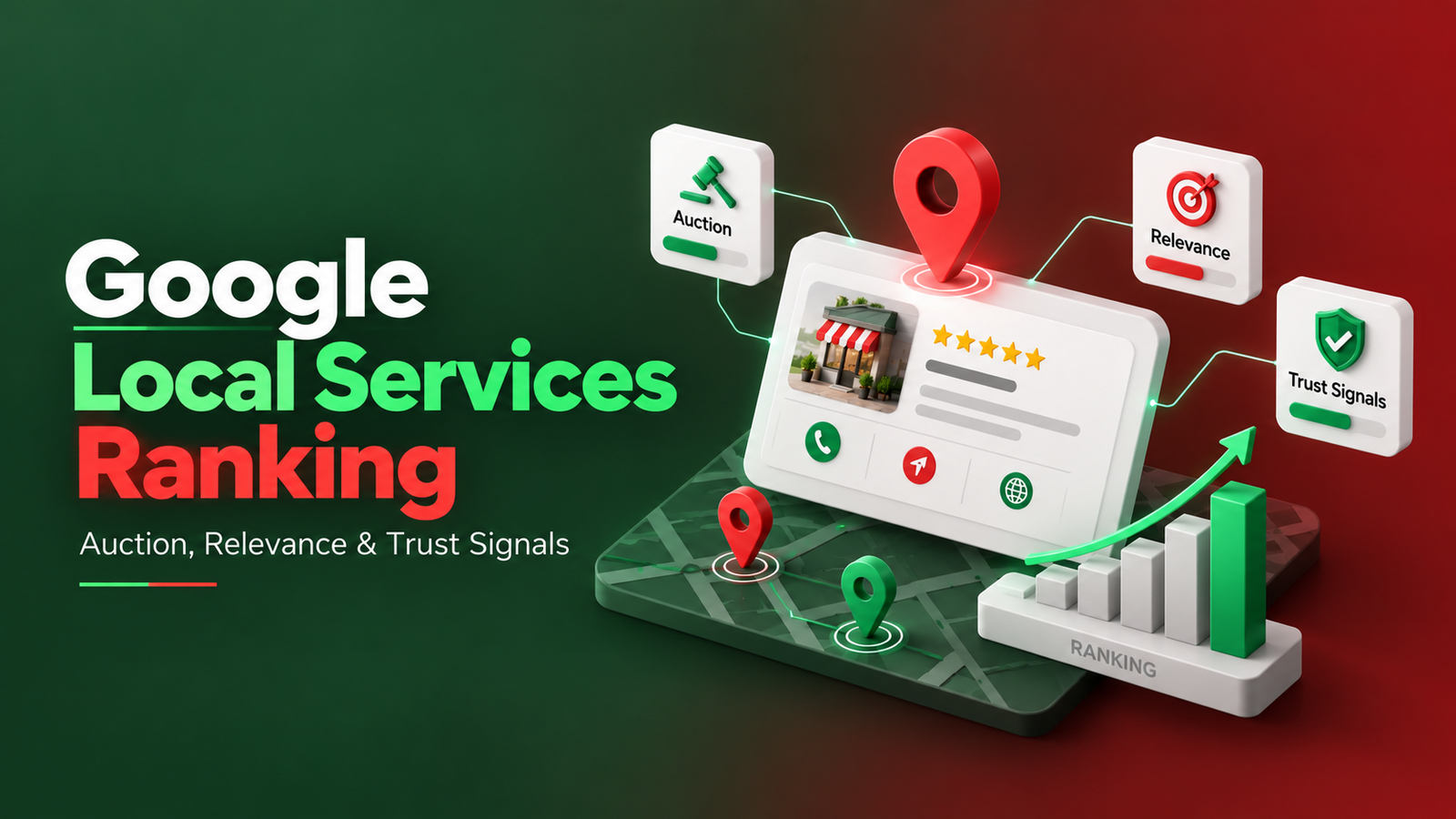
Google Local Services Ranking plays an important role in how local businesses appear when potential customers search for nearby services. For businesses using Google Local Services Ads, visibility is not based on a single ranking factor. Instead, several signals work together to determine which businesses may appear prominently for a relevant local search.
The process involves factors such as auction dynamics, relevance, business information, proximity, reviews, responsiveness, and trust signals. Understanding these elements can help local businesses build a stronger presence and make better decisions about their local SEO and paid search strategy.
In this guide, we will explore how Google Local Services Ranking works, what auction factors mean, why relevance matters, and how trust signals can influence visibility.
What Is Google Local Services Ranking?
Google Local Services Ads are designed to connect people searching for local services with businesses that offer those services. Depending on the search and location, these businesses can appear prominently in Google's local search experience.
Google Local Services Ranking refers to the factors that influence how eligible service providers are positioned or shown within this advertising environment.
It is important to understand that Local Services Ads are different from organic local search results and Google Maps rankings.
Organic local rankings depend heavily on Google's understanding of relevance, distance, and prominence. Local Services Ads involve an advertising system and an auction, along with additional business-quality and trust-related signals.
This distinction matters because improving a Google Business Profile alone does not automatically guarantee a particular Local Services Ads position.
Instead, businesses should think about Google Local Services Ranking as a combination of:
-
Search relevance
-
Service and category matching
-
Location and proximity
-
Reviews and reputation
-
Responsiveness
-
Business information
-
Verification and eligibility
-
Advertising auction factors
-
Customer experience signals
-
Overall trust
Understanding these elements gives local businesses a clearer framework for improving their visibility.
How the Local Services Ads Auction Works
The word auction can make Google's advertising system sound complicated, but the basic idea is straightforward.
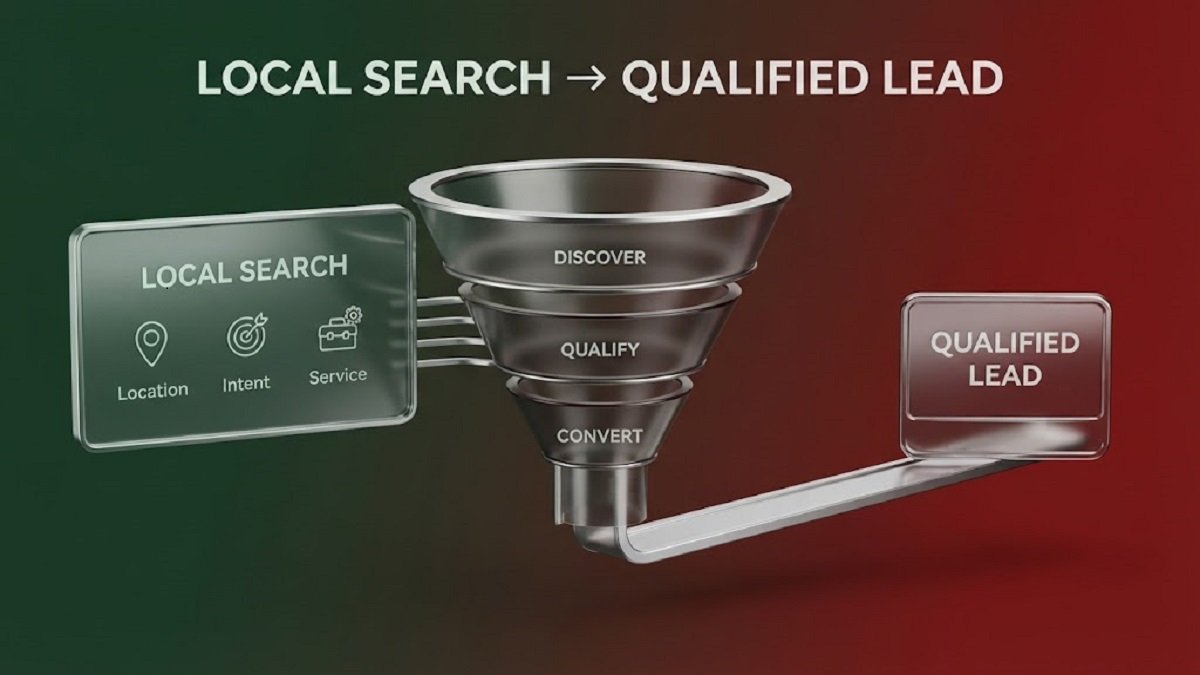
When someone searches for a local service, Google needs to determine which eligible businesses may be shown for that search. Multiple businesses can potentially match the customer's request.
Google then considers several factors when determining ad visibility and placement.
Unlike a simple system where the business offering the highest bid automatically appears first, Google's advertising systems consider more than price.
For Local Services Ads, factors related to the business, the customer's search, location, and the quality or relevance of the match can all matter.
This means a local business should not focus exclusively on increasing advertising spend.
A better approach is to build a strong foundation across the areas the business can control.
Key auction-related considerations can include:
-
The customer's search query
-
The service requested
-
The business's service area
-
Location and proximity
-
Business eligibility
-
Reviews
-
Responsiveness
-
Business profile information
-
Ad budget and bidding-related factors
-
Competition for the same service
Because Google's systems can change, businesses should avoid treating any single factor as a guaranteed formula for placement.
Relevance: Matching the Right Business to the Right Search
Relevance is one of the most important concepts in local search.
Google wants to connect users with businesses that actually provide the service they are searching for.
For example, imagine someone searches for:
“emergency plumber near me.”
A plumbing company that clearly provides emergency plumbing services is more relevant to that search than a general home improvement company that does not specifically offer emergency plumbing.
This is why businesses need to make their services clear.
Your business information should accurately communicate:
-
What services you provide
-
Which customers you serve
-
Where you provide those services
-
What makes your business qualified
-
Whether you offer specialized services
Avoid Trying to Match Every Search
One common mistake is attempting to make a business appear relevant for every possible keyword.
This can create unclear positioning.
Instead, focus on the services your business genuinely provides.
For example, a roofing company could clearly separate services such as:
-
Roof repair
-
Roof replacement
-
Emergency roofing
-
Residential roofing
-
Commercial roofing
Clear service information makes it easier for both customers and search systems to understand the business.
Service Relevance and Business Categories
Business categories and service information help establish context.
If your business provides several related services, each service should be represented accurately in the appropriate business information.
However, adding unrelated services simply because they have search demand can create problems.
Local businesses should avoid keyword stuffing or creating misleading service descriptions.
For example, a digital marketing agency should not claim to provide plumbing, electrical, or legal services simply to attract additional searches.
Google's goal is to connect users with legitimate providers.
Your goal should be to make your actual expertise easy to understand.
Location Is Another Important Signal
Local Services Ads are designed around local intent.
Someone searching for a service usually wants a business that can actually serve their location.
Consider two searches:
“HVAC repair in Brooklyn”
and
“HVAC repair near me.”
Both searches have strong local intent.
Google needs to determine which eligible businesses can serve the customer and how relevant those businesses are to the customer's location.
This makes location an important part of Google Local Services Ranking.
Businesses should make sure their service areas and business information accurately reflect where they operate.
Why Accurate Location Information Matters
If your business claims service areas that you do not actually cover, you may attract searches that do not convert.
That can lead to:
-
Poor customer experience
-
Unqualified leads
-
Wasted advertising spend
-
Lower lead quality
-
Confusing business information
A more focused service area can help you target customers who are genuinely able to use your services.
Reviews and Trust Signals
Trust is critical when customers are choosing a local service provider.
Imagine someone searching for an electrician, lawyer, cleaner, or home repair professional.
The customer may be inviting that business into their home, spending a significant amount of money, or relying on professional expertise.
Reviews can therefore play an important role in the customer's decision-making process.
A strong review profile can communicate:
-
Customer experience
-
Service quality
-
Reliability
-
Professionalism
-
Consistency
Reviews are not simply a number.
The quality, quantity, recency, and overall context of customer feedback can all contribute to how potential customers perceive a business.
How to Build Better Reviews
The most sustainable approach is simple:
Provide a good customer experience and make it easy for satisfied customers to leave honest feedback.
Businesses can create a consistent review-request process after completed jobs.
For example:
-
Complete the customer's service.
-
Confirm that the customer is satisfied.
-
Send a polite review request.
-
Provide the appropriate Google review option.
-
Respond professionally to customer feedback.
Businesses should never purchase fake reviews or create misleading feedback.
Authentic customer experiences provide much more useful information to future customers.
Responsiveness Can Affect Local Services Performance
Local customers often contact businesses because they need help now.
A customer searching for:
“locksmith near me”
may not want to wait several hours for a response.
Similarly, someone searching for an urgent plumbing repair may contact multiple businesses and choose the provider who responds first.
This makes responsiveness an important business-quality consideration.
Businesses should monitor:
-
Missed calls
-
Response time
-
Lead follow-up
-
Business hours
-
Availability
-
Customer communication
A business that receives leads but consistently fails to respond may lose opportunities regardless of how strong its advertising visibility is.
Improve Your Response Process
Consider creating a simple lead-management system.
For every new lead:
Receive → Respond → Qualify → Schedule → Follow Up
This process can help prevent valuable leads from being forgotten.
Business Verification and Eligibility
Local Services Ads also depend on eligibility and business verification requirements.
Google may require businesses in eligible categories to complete specific verification processes before they can participate.
Depending on the business category and market, requirements may include information related to:
-
Business identity
-
Licensing
-
Insurance
-
Background checks
-
Business location
-
Professional credentials
Requirements can vary by category and location.
For this reason, businesses should always review Google's current requirements before launching or expanding Local Services Ads.
Website Relevance Still Matters
Although Local Services Ads are different from organic SEO, your overall online presence still matters for building customer confidence.
Your website should clearly explain:
-
Your primary services
-
Service locations
-
Contact information
-
Business experience
-
Credentials
-
Customer reviews
-
Service process
-
Frequently asked questions
A local service website does not need hundreds of pages to be useful.
A clear, trustworthy website can often do more for customers than a large collection of thin pages.
For example, instead of creating dozens of nearly identical city pages, a business could create useful location-specific content that explains the services available in each market.
Google Business Profile and Local Services
Google Business Profile is another important part of a local business's online presence.
It helps Google and customers understand basic information about the business.
Businesses should keep information accurate and consistent, including:
-
Business name
-
Address or service area
-
Phone number
-
Website
-
Business hours
-
Categories
-
Services
-
Photos
Changes should reflect the actual business.
Avoid manipulating business information simply to target additional keywords.
Accurate information creates a better experience for customers and gives Google clearer information about the business.
The Role of Prominence and Reputation
Prominence is commonly discussed in Google's local search ecosystem.
It generally relates to how well-known or established a business is in the real world and online.
Signals associated with prominence can include things such as:
-
Reviews
-
Links from relevant websites
-
Mentions of the business
-
Overall online presence
-
Public recognition
-
Established business information
However, businesses should not assume that obtaining hundreds of random links will automatically improve Local Services Ads performance.
Quality and relevance matter more than simply collecting links.
A local business may benefit more from being mentioned by a relevant local organization, industry publication, or community website than from dozens of unrelated directories.
Local SEO and Google Local Services Ranking
Local SEO and Local Services Ads are related, but they are not the same thing.
Local SEO focuses primarily on improving a business's visibility in organic local search results, Google Maps, and other unpaid search experiences.
Local Services Ads are paid placements designed to connect service businesses with customers searching for specific services.
A business can work on both strategies at the same time.
For example, a company could improve:
-
Google Business Profile optimization
-
Local website content
-
Reviews
-
Local citations
-
Relevant backlinks
-
Local landing pages
-
Customer experience
while also managing its Local Services Ads campaign.
This creates a broader local search strategy rather than relying entirely on one channel.
Common Mistakes That Can Hurt Local Search Performance
Businesses often focus heavily on ranking while overlooking the customer experience behind the ranking.
Here are several common mistakes to avoid.
1. Using Misleading Service Information
Do not list services that your business does not actually provide.
2. Ignoring Customer Reviews
A business that rarely asks for legitimate customer feedback may miss an opportunity to build social proof.
3. Responding Too Slowly
Even a relevant lead can be lost if the business takes too long to respond.
4. Using Inconsistent Business Information
Different business names, phone numbers, or locations across online platforms can create confusion.
5. Over-Optimizing Content
Repeating the same keyword excessively does not create better content.
Write naturally for customers first.
6. Targeting Too Many Locations
A business should clearly define where it can realistically provide services.
7. Ignoring Lead Quality
Generating more leads is not always the same as generating better leads.
Businesses should track whether leads actually become appointments and customers.
How to Improve Your Google Local Services Ranking Strategy
Instead of searching for one secret ranking factor, build a complete system.
Step 1: Define Your Core Services
Identify the services that generate the most value for your business.
Step 2: Clarify Your Service Area
Make sure your location and service-area information accurately reflect where you operate.
Step 3: Strengthen Your Business Profile
Keep important business information accurate and up to date.
Step 4: Build Genuine Reviews
Create a consistent process for requesting honest reviews from real customers.
Step 5: Improve Lead Response
Monitor calls and leads and respond quickly during business hours.
Step 6: Improve Your Website
Make your services, locations, contact information, and customer value clear.
Step 7: Track Lead Quality
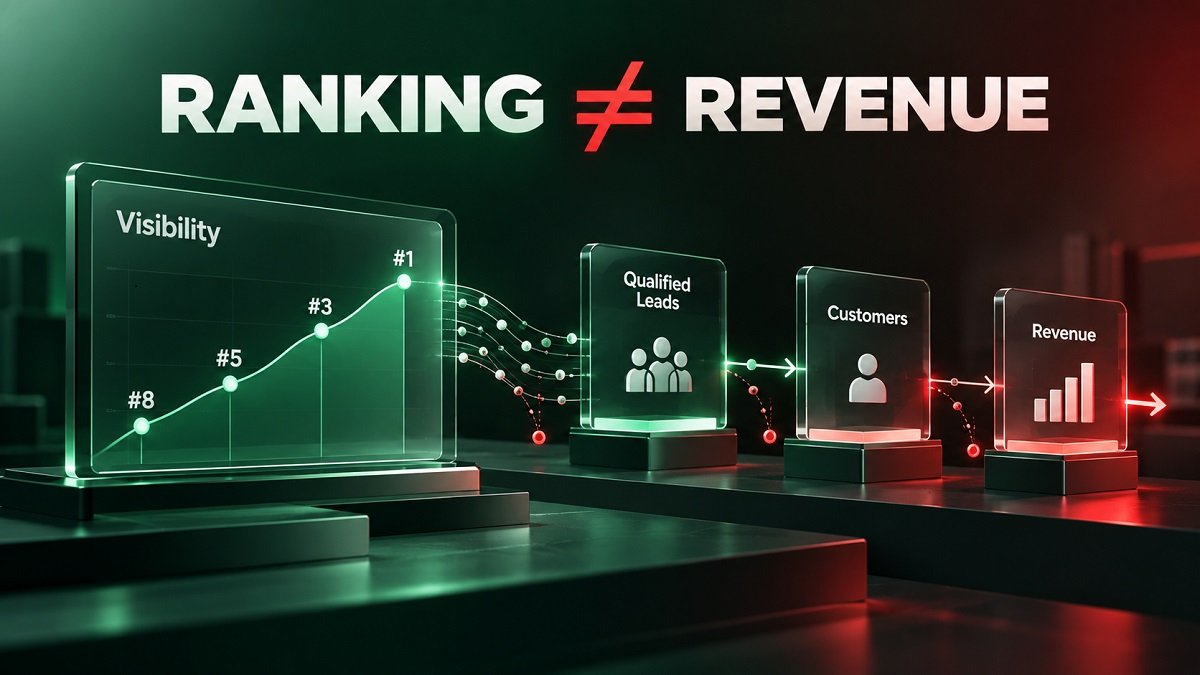
Measure more than impressions or clicks.
Track:
Lead → Appointment → Customer → Revenue
This gives you a clearer picture of whether your local marketing is actually producing business results.
Measure the Signals That Matter
A data-driven local marketing strategy requires measurement.
Instead of asking only:
“Am I ranking?”
ask:
-
How many leads am I receiving?
-
Which services generate the most leads?
-
Which locations perform best?
-
How quickly do we respond?
-
How many leads become appointments?
-
How many appointments become customers?
-
What is the cost per qualified lead?
-
Which services produce the highest revenue?
These metrics can reveal opportunities that a ranking position alone cannot show.
For example, a campaign may generate fewer leads but produce more qualified customers.
That is why businesses should connect advertising data with actual business outcomes whenever possible.
Google Local Services Ranking: A Practical Checklist
Use this checklist to review your local search strategy:
-
Core services are clearly defined
-
Business information is accurate
-
Service areas reflect actual coverage
-
Google Business Profile information is maintained
-
Customer reviews are collected legitimately
-
Reviews receive professional responses
-
Calls and leads are answered promptly
-
Website services are clearly explained
-
Location information is consistent
-
Local content provides genuine value
-
Relevant local mentions and links are developed naturally
-
Advertising budget is monitored
-
Lead quality is tracked
-
Appointment and conversion data is measured
-
Marketing decisions are based on real performance data
As we wrap things up
Google Local Services Ranking is not about finding one magic ranking signal.
The system involves multiple elements, including auction factors, relevance, location, business information, reviews, responsiveness, eligibility, and trust.
For local businesses, the most useful approach is to focus on the signals they can genuinely improve.
Make your services clear. Keep business information accurate. Build authentic customer reviews. Respond to leads quickly. Maintain a trustworthy online presence. Then measure what happens after the lead arrives.
At the same time, remember that Local Services Ads and organic local search are different systems. A strong local SEO strategy can complement paid local advertising, but businesses should evaluate each channel based on its own purpose and performance.
Ultimately, the goal is not simply to appear in more searches. The goal is to connect the right local customers with the right service at the right time—and turn that visibility into measurable business results.