Competitive Gap Analysis in Local Search Markets
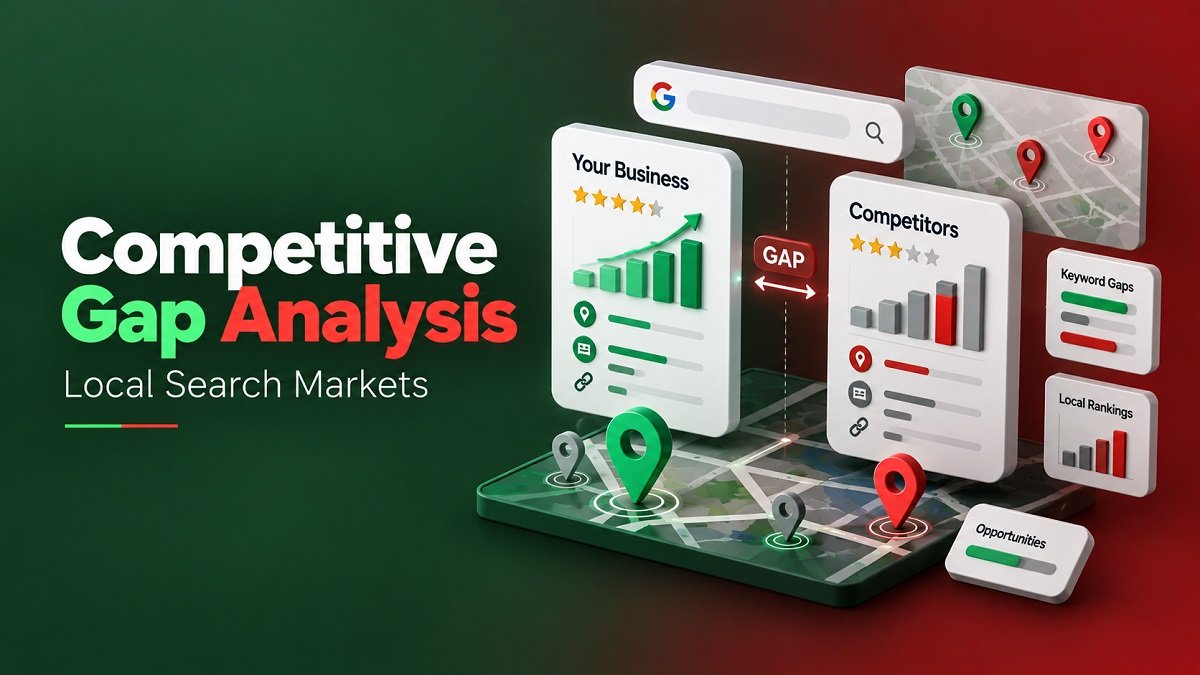
Competitive Gap Analysis in Local Search Markets helps local businesses understand how they compare with competitors that are targeting the same customers and search opportunities. A strong competitive gap analysis looks beyond rankings and examines content, local SEO, Google Business Profile signals, reviews, citations, backlinks, services, and overall search visibility.
For businesses that depend on local customers, understanding these gaps can make SEO planning more focused and practical. Instead of copying what competitors are doing, businesses can identify areas where competitors are stronger, where customer needs are not being fully addressed, and where new opportunities exist.
What Is Competitive Gap Analysis in Local Search Markets?
Competitive Gap Analysis in Local Search Markets is the process of comparing your local search presence with competing businesses in the same geographic market. The goal is to identify differences that may affect visibility, customer engagement, and organic search performance.
A local competitor may rank for services that your website does not mention. Another competitor may have more complete business information, stronger reviews, better local content, or more relevant local links.
By performing Competitive Gap Analysis in Local Search Markets, you can organize these differences into actionable SEO opportunities.
The analysis can include:
-
Local keyword coverage
-
Google Business Profile optimization
-
Website content
-
Service pages
-
Local landing pages
-
Customer reviews
-
Local citations
-
Backlinks
-
Internal linking
-
Location-specific content
-
Search visibility
-
Conversion opportunities
Why Competitive Gap Analysis in Local Search Markets Matters
Local search is highly competitive because businesses often compete for customers within a limited geographic area. A company may have a strong website but still struggle to appear prominently for important local searches.
Competitive Gap Analysis in Local Search Markets helps explain why this can happen.
For example, imagine two businesses offering the same service. One website has five detailed service pages, location-specific content, consistent business information, and hundreds of relevant reviews. The other website has only a basic homepage and a short service description.
The difference is not necessarily the quality of the businesses themselves. Their online signals may simply be different.
A structured Competitive Gap Analysis in Local Search Markets can reveal those differences and help create a more informed local SEO strategy.
Identify Your Real Local Search Competitors
The first step in Competitive Gap Analysis in Local Search Markets is identifying the businesses you actually compete with in search results.
Your offline competitors are not always your online competitors. A business across town may compete with you in the real world but never appear for your target searches. Meanwhile, a smaller business may consistently appear in Google's local results and become a major online competitor.
Search your most important local queries and record the businesses that repeatedly appear.
Look at searches such as:
-
Primary service + city
-
Primary service + neighborhood
-
Best + service + location
-
Service near me
-
Local service-related questions
This gives you a practical competitor set for Competitive Gap Analysis in Local Search Markets.
Analyze Local Keyword Gaps
Keyword coverage is one of the most useful parts of Competitive Gap Analysis in Local Search Markets.
Start by identifying the keywords your competitors appear for but your website does not target effectively. These can include service keywords, location keywords, problem-based searches, and informational queries.
For example, a local plumbing company might target “plumber in Dallas” but overlook searches such as:
-
Emergency plumber in Dallas
-
Water heater repair Dallas
-
Drain cleaning near me
-
Commercial plumbing services Dallas
-
Sewer line repair Dallas
A competitor may have dedicated pages for these services while your website has only one general page.
This creates a content and keyword gap.
The purpose of Competitive Gap Analysis in Local Search Markets is not to add every possible keyword. Instead, select keywords that match your actual services, customers, and geographic market.
Compare Competitor Content
Content provides another important area for Competitive Gap Analysis in Local Search Markets.
Review the pages competitors use to attract local search traffic. Pay attention to:
-
Number of service pages
-
Location pages
-
Blog content
-
Frequently asked questions
-
Service explanations
-
Pricing information
-
Local guides
-
Customer-focused resources
Then compare that content with your own website.
You may discover that competitors answer questions your website does not address. You may also find that their service pages provide more useful information about processes, locations, benefits, and customer concerns.
A Competitive Gap Analysis in Local Search Markets can turn these observations into a content roadmap.
Review Google Business Profile Differences
Google Business Profile is another important area to examine during Competitive Gap Analysis in Local Search Markets.
Compare your profile with competing businesses and check information such as:
-
Primary category
-
Secondary categories
-
Services
-
Business description
-
Photos
-
Posts
-
Reviews
-
Review responses
-
Business information
-
Website URL
The goal is not to select categories simply because competitors use them. Categories and services should accurately represent your business.
When Competitive Gap Analysis in Local Search Markets identifies a profile weakness, the solution should be based on accurate business information and Google's guidelines rather than shortcuts.
Compare Customer Reviews
Reviews can provide valuable competitive information.
During Competitive Gap Analysis in Local Search Markets, examine both the quantity and quality of competitor reviews. Look for recurring themes in customer feedback.
Customers may frequently mention:
-
Fast service
-
Friendly staff
-
Professional communication
-
Product quality
-
Specific services
-
Convenience
-
Pricing
-
Reliability
These patterns can reveal what customers value.
Your goal is not to manufacture similar reviews. Instead, use the information to understand customer expectations and improve the actual customer experience.
Analyze Local Citation Gaps
A citation is a business mention that commonly includes information such as the business name, address, phone number, and website.
Competitive Gap Analysis in Local Search Markets can identify directories and local platforms where competitors have accurate listings but your business is missing.
Check:
-
Industry directories
-
Local directories
-
Chamber websites
-
Professional organizations
-
Local business publications
-
Relevant review platforms
Focus on quality and relevance rather than creating large numbers of low-value listings.
Study Competitor Backlinks
Backlinks can also reveal opportunities through Competitive Gap Analysis in Local Search Markets.
Look for websites that mention your competitors but not your business. Then determine why those websites linked to them.
Potential sources may include:
-
Local news websites
-
Community organizations
-
Industry publications
-
Local blogs
-
Business associations
-
Event websites
Not every competitor backlink will be appropriate for your business. Evaluate relevance before pursuing an opportunity.
A quality-focused approach makes Competitive Gap Analysis in Local Search Markets more useful than simply counting backlinks.
Examine Location-Specific Content
Local relevance is especially important when customers search for services in specific areas.
During Competitive Gap Analysis in Local Search Markets, examine how competitors communicate their geographic relevance.
Look for:
-
City pages
-
Neighborhood pages
-
Service-area information
-
Local guides
-
Community content
-
Location-specific FAQs
If competitors provide useful information for individual service areas while your website provides only generic content, that may represent an opportunity.
However, avoid creating thin location pages that provide little unique value. Local content should be genuinely useful to visitors.
Compare Website Structure and User Experience
A Competitive Gap Analysis in Local Search Markets should not focus only on keywords.
Website structure can affect how easily users find information and how effectively they move toward contacting a business.
Review:
-
Navigation
-
Service-page structure
-
Internal links
-
Contact information
-
Calls to action
-
Mobile usability
-
Page organization
-
FAQ sections
-
Trust information
A competitor may have similar rankings but generate more leads because its website makes it easier for visitors to take action.
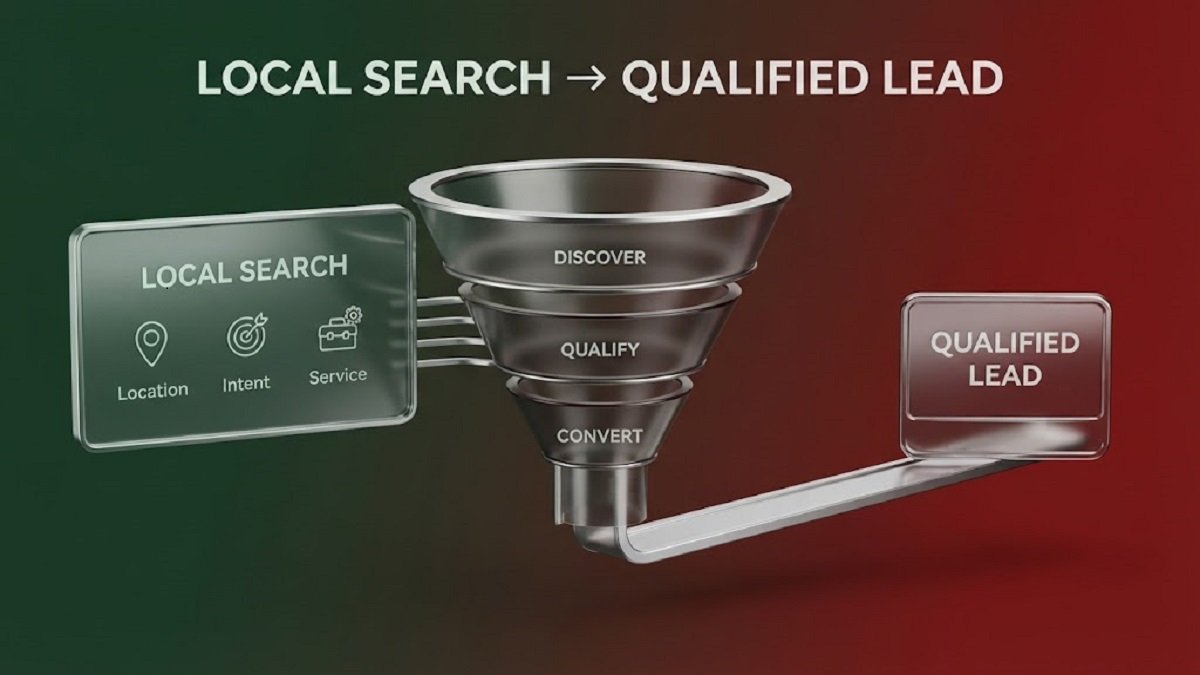
This is why Competitive Gap Analysis in Local Search Markets should connect SEO observations with the customer journey.
Find Conversion Gaps
Search visibility is only part of local marketing.
One useful element of Competitive Gap Analysis in Local Search Markets is identifying what competitors do to convert visitors into customers.
Check whether competitors provide:
-
Click-to-call options
-
Contact forms
-
Appointment requests
-
Service inquiries
-
Clear business hours
-
Location details
-
Strong calls to action
-
Helpful FAQs
If your website receives visitors but generates few inquiries, the problem may involve conversion rather than rankings alone.
Build a Competitive Gap Analysis Framework
A simple Competitive Gap Analysis in Local Search Markets framework can organize your research.
Create columns for:
| Area | Your Business | Competitor | Gap | Action |
|---|---|---|---|---|
| Keywords | Limited | Broad coverage | Yes | Create relevant pages |
| Reviews | Moderate | Strong | Yes | Improve customer experience |
| GBP | Basic | Detailed | Yes | Complete accurate information |
| Content | Few pages | Extensive | Yes | Build useful content |
| Citations | Partial | Consistent | Yes | Fix relevant listings |
| Backlinks | Limited | Strong local links | Yes | Explore relevant opportunities |
This makes Competitive Gap Analysis in Local Search Markets easier to turn into an actual SEO plan.
Prioritize the Most Useful Gaps
Not every gap deserves immediate attention.
After completing Competitive Gap Analysis in Local Search Markets, group opportunities based on relevance, potential impact, effort, and business value.
For example, fixing incorrect business information may be more practical than immediately pursuing a difficult high-authority backlink.
Likewise, creating a missing service page may be more useful than publishing several generic blog posts.
Prioritization helps prevent your Competitive Gap Analysis in Local Search Markets from becoming a simple research exercise.
Avoid Copying Competitors
One important principle of Competitive Gap Analysis in Local Search Markets is that competitor research should inform your strategy, not replace it.
If a competitor has ten location pages, that does not automatically mean you need ten similar pages.
If a competitor publishes weekly blog posts, publishing more content may not solve your problem.
Ask:
Does this opportunity improve relevance, usefulness, trust, or customer experience?
That question keeps Competitive Gap Analysis in Local Search Markets focused on genuine business value.
Track Your Progress
A Competitive Gap Analysis in Local Search Markets should be repeated periodically because local search conditions change.
Track metrics such as:
-
Local keyword visibility
-
Organic traffic
-
Google Business Profile interactions
-
Website calls
-
Form submissions
-
Direction requests
-
Review growth
-
Relevant referring domains
-
New service-page performance
Compare your progress against your own previous performance rather than assuming that every competitor movement requires a response.
Common Mistakes to Avoid
Several mistakes can reduce the value of Competitive Gap Analysis in Local Search Markets.
Focusing Only on Rankings
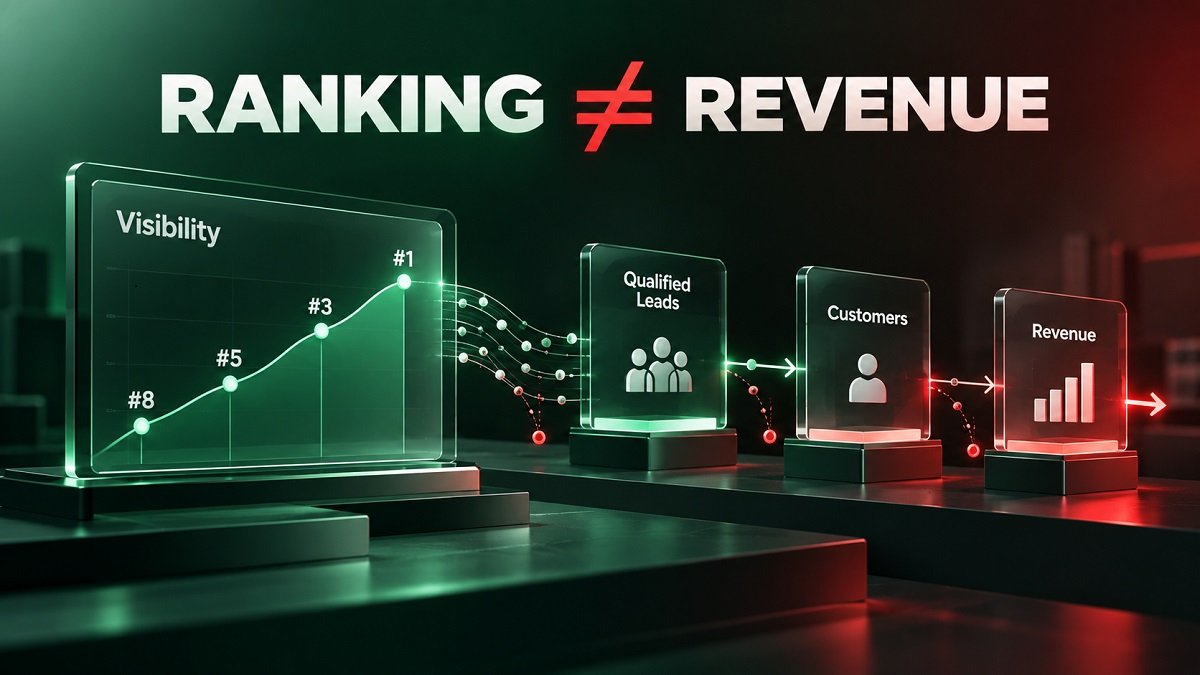
Rankings are useful, but they do not tell the entire story. Consider content, reviews, business information, links, and conversions too.
Choosing Too Many Keywords
More keywords do not automatically create better visibility. Focus on searches that match real customer needs.
Copying Competitor Content
Use competitor research to identify opportunities while creating original, useful content for your own audience.
Ignoring Customer Experience
SEO cannot compensate for a poor customer experience. Reviews and reputation often reflect what customers actually experience.
Chasing Every Backlink
A competitor's backlink is not automatically a good opportunity for your business.
Creating Thin Local Pages
Location pages should provide meaningful information instead of simply replacing one city name with another.
Turn Competitive Research Into a Local SEO Strategy
The real value of Competitive Gap Analysis in Local Search Markets comes from turning research into action.
This process helps businesses build a stronger local SEO strategy based on actual competitive gaps and customer needs.
Your final strategy might include:
-
Improving Google Business Profile information.
-
Creating missing service pages.
-
Developing useful location-specific content.
-
Fixing inconsistent citations.
-
Building relevant local relationships.
-
Improving internal linking.
-
Strengthening customer review processes.
-
Improving website conversion paths.
-
Creating content around genuine customer questions.
-
Tracking performance over time.
This creates a practical connection between Competitive Gap Analysis in Local Search Markets and broader local SEO efforts.
Bringing it all to gether
Competitive Gap Analysis in Local Search Markets gives businesses a structured way to understand local search competition and discover areas for improvement. By analyzing keywords, content, Google Business Profile information, reviews, citations, backlinks, location relevance, website structure, and conversions, businesses can build a more focused local SEO strategy.
The objective is not to copy competitors or chase every ranking change. Instead, use Competitive Gap Analysis in Local Search Markets to identify meaningful opportunities that improve search visibility and provide more value to local customers.
When the analysis is combined with consistent execution and regular measurement, it becomes an ongoing part of a practical local SEO strategy.